The Beatles
Merseybeat / Pop / Rock / Psychedelia
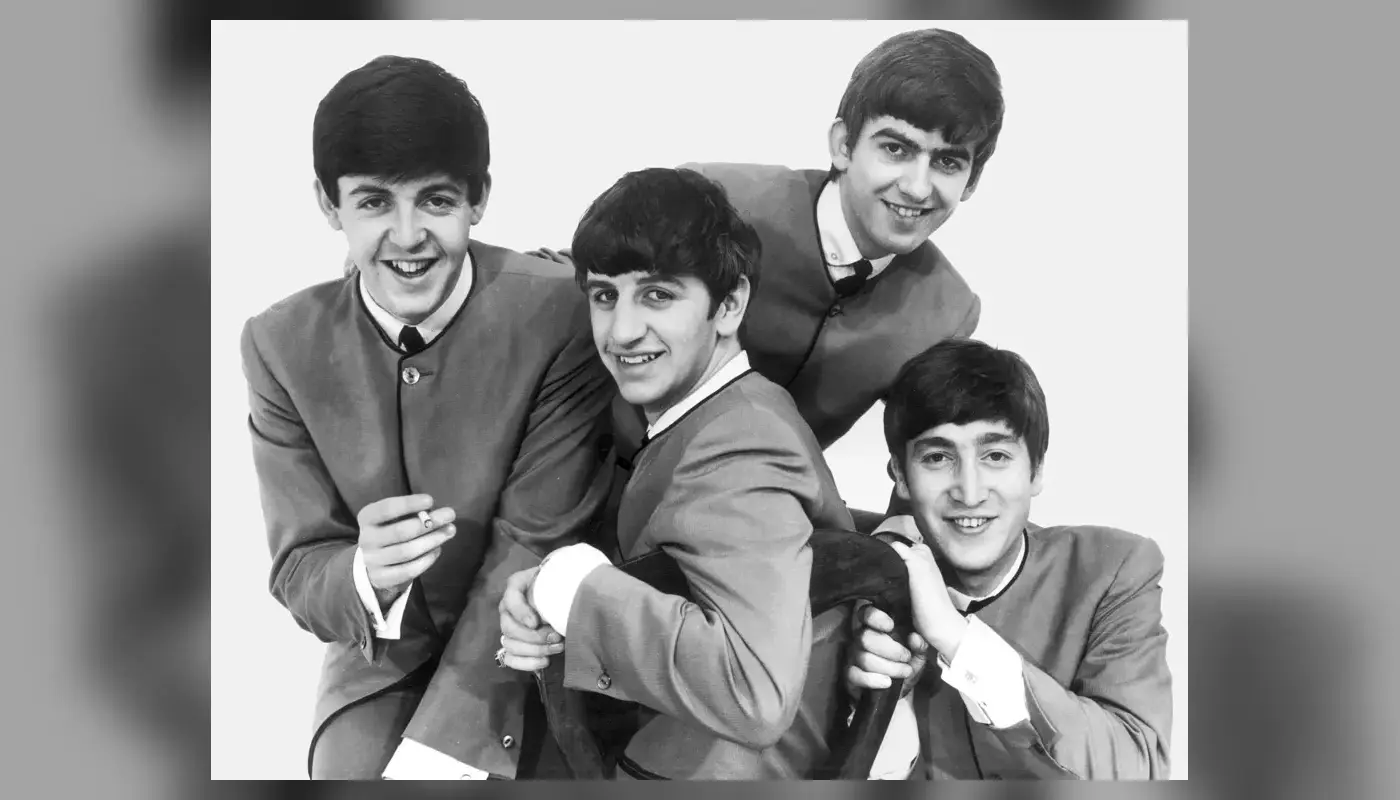
The Liverpool quartet changed much more than the sound of popular music in the 1960s. They reshaped youth culture, the meaning of an album, the uses of the studio and the model of international stardom.


The story through the 1960s
The Liverpool quartet changed much more than the sound of popular music in the 1960s. They reshaped youth culture, the meaning of an album, the uses of the studio and the model of international stardom.
Entering the 1960s
As the 1960s began, the band built around John Lennon, Paul McCartney and George Harrison was undergoing a demanding apprenticeship between Liverpool and Hamburg. Long sets of rock ’n’ roll and rhythm and blues developed musical stamina and communication onstage. Those early years with Pete Best on drums were the largely unseen preparation for Beatlemania.
Brian Epstein’s management and George Martin’s production were decisive in turning a local club band into a national recording act. Ringo Starr’s arrival in 1962 completed the familiar line-up. “Love Me Do”, followed by “Please Please Me”, revealed what distinguished a pop group writing its own songs.
Beatlemania and the worldwide breakthrough
Beatlemania began in Britain in 1963 and became an international phenomenon in 1964 through The Ed Sullivan Show appearances and extraordinary success on the American charts. The band reshaped American rock ’n’ roll influences through British vocal harmonies and Lennon–McCartney songwriting. Films, tours, press conferences and fan culture demonstrated the new scale of a pop group in the media age.
The exhausting touring schedule ended in 1966, accelerating the move from stage to studio. Arrangements that could not be reproduced in concert, tape experiments, classical and Indian instruments, backwards recordings and layered voices now became central to the music.
The album and studio revolution
Rubber Soul and Revolver showed how a pop album could develop beyond a collection of separate hits. Lyrics became more personal, abstract and socially observant. Harrison’s interest in Indian music, McCartney’s attention to melody and arrangement, and Lennon’s experimental instincts widened the band’s musical world.
In 1967, Sgt. Pepper’s Lonely Hearts Club Band became a cultural event whose cover, sequencing and imagined studio world worked together. Magical Mystery Tour, The Beatles and Abbey Road brought further peaks in songwriting and production despite growing internal strain.
Relationships within the band and the final years
Epstein’s death in 1967 left a management vacuum. Apple Corps intensified financial and personal tensions. Lennon’s relationship with Yoko Ono, McCartney’s efforts to maintain a working discipline, Harrison’s wish for more room as a composer and Starr’s occasional feelings of exclusion tested the balance of the group.
Even so, the 1968–69 sessions produced lasting works including “While My Guitar Gently Weeps”, “Something”, “Come Together”, “Let It Be” and the medley on the second side of Abbey Road. The 1969 rooftop concert was their final live performance; the break-up became public in 1970.
The place in the 1960s
Sales and chart positions explain only part of their achievement. The self-writing band, the artistic weight of the album, studio experimentation and a distinctive visual identity became reference points for later rock, pop, psychedelia and art rock. Their journey from innocent dance pop to elaborate studio art makes the transformation of the 1960s audible within one career.
Songwriting, production and the recording team
That development depended on the studio team as well as the four musicians: George Martin, engineer Norman Smith and later Geoff Emerick were important contributors. Martin used his classical knowledge to turn ideas into workable arrangements. The Abbey Road staff pushed the limits of four-track and then eight-track recording. Altered piano speeds, reversed tapes, artificial double tracking and the joining of different performances made the studio part of composition itself.
The Lennon–McCartney partnership had no single method. Although the two increasingly wrote separately, they completed one another’s songs, supplied middle sections or lyric ideas and raised their standards through competition. Harrison’s songs and interest in Indian music expanded the harmonic range; Starr’s economical but imaginative drumming held complicated arrangements together. Within this collective identity, the Beatles combined the roles of composer, performer and partner in production.
Public attention, private life and the pressures of the era
Behind Beatlemania’s cheerful face lay relentless touring, security problems and the prospect of every remark becoming a headline. The American reaction to Lennon’s 1966 comment about the group’s popularity compared with Christianity showed how pop stars had moved into religious and political debate. Drug experiences, the association with Maharishi Mahesh Yogi, antiwar views and changing clothes also became symbols of a generational divide.
In 1968–69, wives, business associates and individual artistic ambitions played a growing part in group decisions. To place responsibility for these tensions on one person simplifies the history. Four adult writers and musicians were moving in different directions within a shared organisation. The strength of the final recordings shows a partnership becoming difficult to manage while its creativity remained formidable.
Selected recordings for exploring the decade
This chronological selection follows the career’s direction, changes in sound and major turning points across the decade. It is a listening route rather than a ranking of the best songs. Individual recording features will be linked as they become available.
Love Me Do
The first single introduced the group’s direct harmonies and rhythmic approach.
She Loves You
Beatlemania’s explosive energy and an unforgettable vocal hook.
A Hard Day’s Night
Lennon–McCartney songwriting working within the shared world of film and album.
In My Life
A turn towards personal memory and mature songwriting.
Tomorrow Never Knows
Tape loops and studio experiments opening a door to psychedelic rock.
A Day in the Life
An orchestral climax and a two-part structure at a high point of the studio era.
While My Guitar Gently Weeps
Harrison’s growing presence as a songwriter.
Something
Late-career melodic maturity in a Harrison masterpiece.
Explore original Oldies Radyo designs
All the T-shirt, mug and wallpaper previews shown here come from Oldies Radyo’s Etsy listings.

1964 British Invasion Wallpaper
An original Oldies Radyo design bringing the London beat scene, young guitar bands and the energy of 1964 into the music room.
View on Etsy →
1968 Peace, Love & Groovy Wallpaper
An original Oldies Radyo design inspired by 1968, with flowers, peace signs, guitars and the period’s spirit of freedom.
View on Etsy →
Mods vs Rockers T-shirt
An original Oldies Radyo design recalling the famous 1960s rivalry between scooter and motorcycle youth cultures.
View on Etsy →- Rock & Roll Hall of Fame — The Beatles
- The Beatles — Official History
- Encyclopaedia Britannica — The Beatles
These articles were originally written in Turkish for Oldies Radyo through comparisons of international institutional sources and archives. This English edition preserves their scope and editorial approach.
Related 1960s artist features