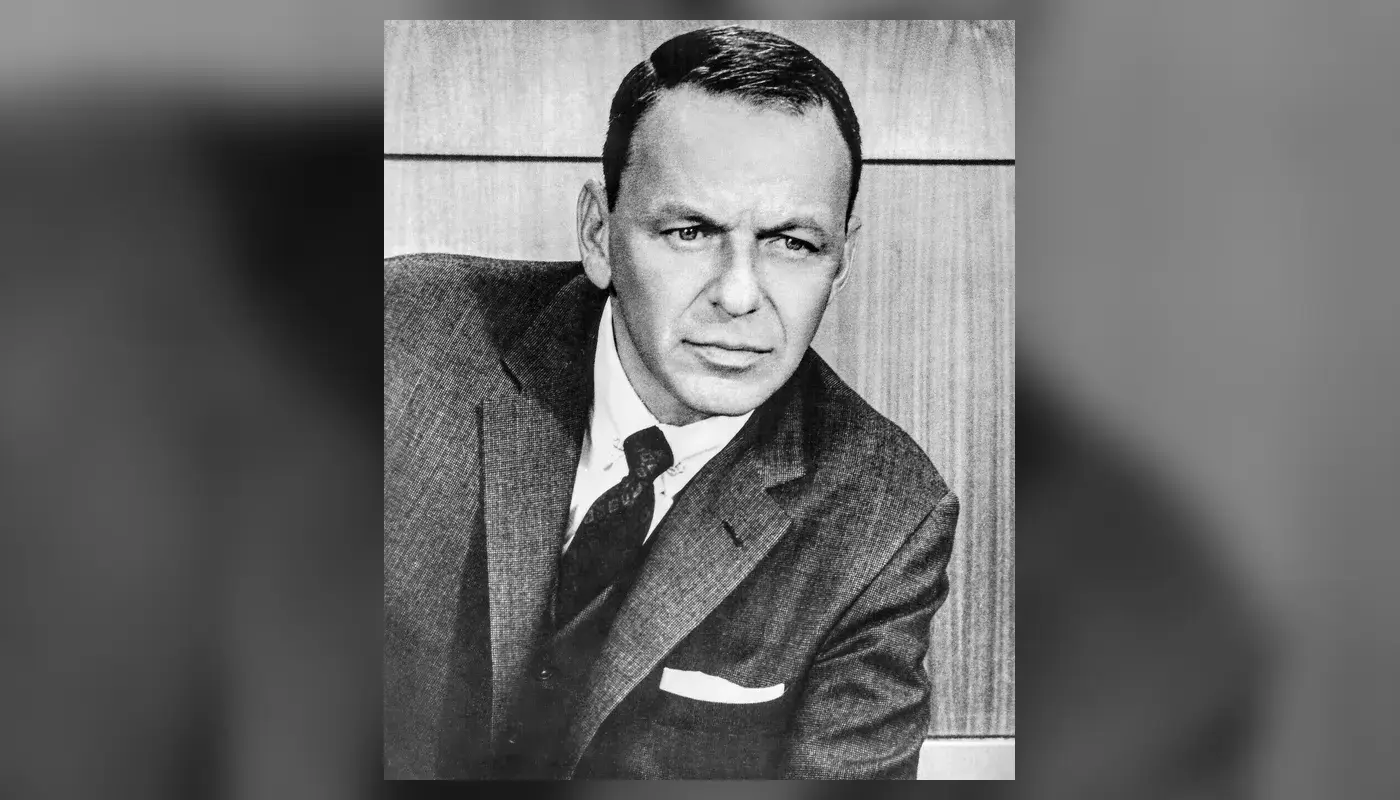
Frank Sinatra
Traditional Pop / Jazz Vocal / Swing
Frank Sinatra maintained his authority in adult pop throughout the rock era, renewing his career in the 1960s through Reprise Records, concept albums, the Rat Pack and new hits.

The story through the 1960s
Frank Sinatra maintained his authority in adult pop throughout the rock era, renewing his career in the 1960s through Reprise Records, concept albums, the Rat Pack and new hits.
Explore the career in the 1950s
Reprise Records and artistic control
After developing the art of the concept album with Capitol Records in the 1950s, Sinatra founded Reprise in 1960. He sought greater control over repertoire, recording schedules and career decisions.
Ring-a-Ding-Ding! gave the new company an energetic beginning. While continuing the swing tradition with large orchestras, Sinatra brought album presentation and production closer to an artist-centred model.
The Rat Pack and Las Vegas
Rat Pack performances with Dean Martin, Sammy Davis Jr., Peter Lawford and Joey Bishop combined music, comedy, improvisation and an image of male friendship. Las Vegas became a principal centre of Sinatra’s live stardom.
Although the circle’s political connections and masculine image later attracted criticism, they exercised a great appeal within the entertainment culture of the early 1960s. Films such as Ocean’s 11 carried that identity onto the screen.
Frank Sinatra: stage presence through the years
All images in this gallery show the artist featured here. Different periods are placed alongside one another to illustrate changes across the career.

Concept albums and maturity
Sinatra and Strings, The Concert Sinatra and September of My Years explored different aspects of vocal phrasing, orchestration and ageing. In particular, September of My Years placed middle age, regret and the passage of time at the centre of a pop album.
Sinatra at the Sands, with Count Basie’s orchestra and Quincy Jones’ arrangements, became a high point of live swing. Sinatra refined his ability to sing behind the beat and make lyrics meaningful through an almost spoken delivery.
Unexpected hits in a new generation
“Strangers in the Night” achieved enormous worldwide success in 1966. Although Sinatra was not especially fond of it, the recording returned him to the top of the pop charts during the British Invasion.
His duet with Nancy Sinatra, “Somethin’ Stupid”, reached number one in 1967. Released in 1969, “My Way” was not initially his greatest American chart success, but it gradually became identified with his public personality.
Politics, private life and the legacy
His connections with the Democratic Party and John F. Kennedy were visible during the 1960 election; relations with the Kennedy family later weakened. His brief marriage to Mia Farrow, its age difference and media attention kept his private life in public view.
The decade demonstrated how Sinatra could remain central in the rock era through another audience, repertoire and album aesthetic. His influence continued in adult pop, lounge music, jazz singing and the concept-album tradition.
Reprise and artistic control
When Sinatra founded Reprise in 1960, he wanted more than a company issuing his own records: he sought a model giving performers more influence over repertoire, sessions and releases. He carried the experience of his Capitol concept albums into the new label. Arrangers and orchestras including Nelson Riddle, Gordon Jenkins, Billy May and Count Basie helped create different emotional worlds.
The Sinatra–Basie partnership and Jones’ arrangements joined swing traditions to the tougher rhythmic sensibility of the 1960s. It Might as Well Be Swing and the live Sands recordings revealed a singer conversing with the rhythm rather than simply carrying a large orchestra behind him.
The Rat Pack, politics and generational change
Las Vegas Rat Pack shows joined music, comedy and male friendship. At a time when Davis faced racial discrimination, solidarity on stage held symbolic importance. Viewed today, sexist and ethnic jokes also reveal the era’s limitations. Sinatra publicly supported civil rights, although his political relationships remained complicated and changeable.
The expanding post-Beatles youth market did not end Sinatra’s career. It encouraged more conscious choices about age, time and loss. September of My Years, “It Was a Very Good Year” and “That’s Life” placed adult retrospection at the centre of popular music. “My Way” summed up an image of personal resistance at the decade’s end, but the nuance of his art extended beyond that defiant persona.
Selected recordings for exploring the decade
This chronological selection follows the career’s direction, changes in sound and major turning points across the decade. It is a listening route rather than a ranking of the best songs. Individual recording features will be linked as they become available.
Ring-a-Ding-Ding!
An energetic, independent beginning to the Reprise period.
I Have Dreamed
Orchestral vocal mastery on The Concert Sinatra.
It Was a Very Good Year
A dramatic interpretation of ageing and memory.
Strangers in the Night
A new worldwide pop peak in the rock era.
Sinatra at the Sands
Live swing authority with Basie and Quincy Jones.
Somethin’ Stupid
An unusual family duet with Nancy Sinatra and a number one.
My Way
The enduring standard often heard as a summary of his career.
Explore original Oldies Radyo designs
All the T-shirt, mug and wallpaper previews shown here come from Oldies Radyo’s Etsy listings.

1964 British Invasion Wallpaper
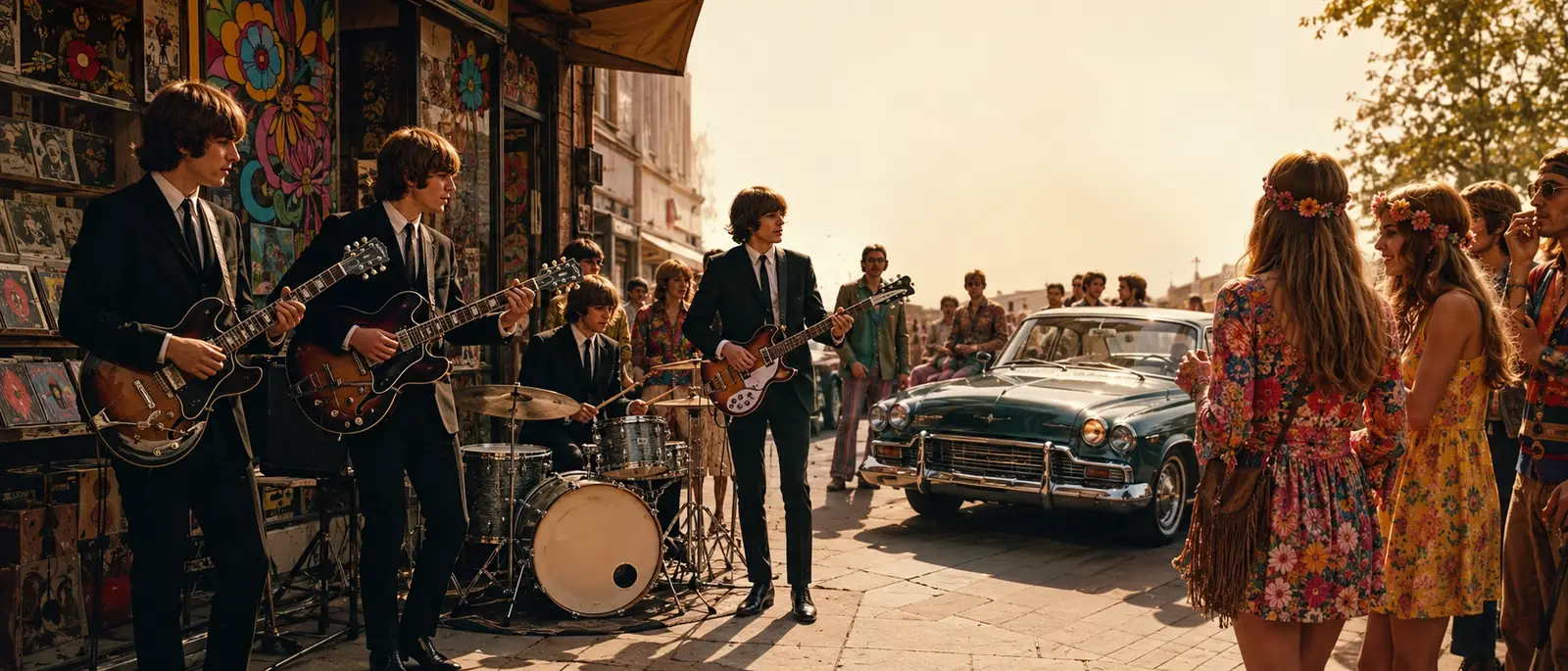
An original Oldies Radyo design bringing the London beat scene, young guitar bands and the energy of 1964 into the music room.
View on Etsy →
1968 Peace, Love & Groovy Wallpaper
An original Oldies Radyo design inspired by 1968, with flowers, peace signs, guitars and the period’s spirit of freedom.
View on Etsy →
Mods vs Rockers T-shirt
An original Oldies Radyo design recalling the famous 1960s rivalry between scooter and motorcycle youth cultures.
View on Etsy →These articles were originally written in Turkish for Oldies Radyo through comparisons of international institutional sources and archives. This English edition preserves their scope and editorial approach.
Related 1960s features