Aretha Franklin
Soul / Gospel / R&B
Aretha Franklin moved to the centre of soul in the second half of the 1960s, joining her gospel roots to a mature woman’s voice, command of the piano and a feeling of freedom.

The story through the 1960s
Aretha Franklin moved to the centre of soul in the second half of the 1960s, joining her gospel roots to a mature woman’s voice, command of the piano and a feeling of freedom.
Church, family and the early recordings
Growing up in the Detroit household of preacher C. L. Franklin, Aretha knew some of gospel’s greatest performers at close quarters. She played piano and sang at New Bethel Baptist Church as a child and made her first gospel recordings while still young.
Family life and becoming a mother at a very early age brought heavy responsibilities behind the career. With her father’s support, she turned towards secular music and signed with Columbia Records in 1960.
The Columbia years
John Hammond recognised her immense talent, but Columbia struggled to place her among jazz, pop standards, blues and orchestral arrangements. She made impressive recordings there, although her singular identity had yet to emerge fully.
Moments when Franklin accompanied herself on piano and used gospel phrases freely pointed towards the transformation to come. When her contract ended in 1966, Atlantic Records’ Jerry Wexler offered a setting that felt more natural to her.
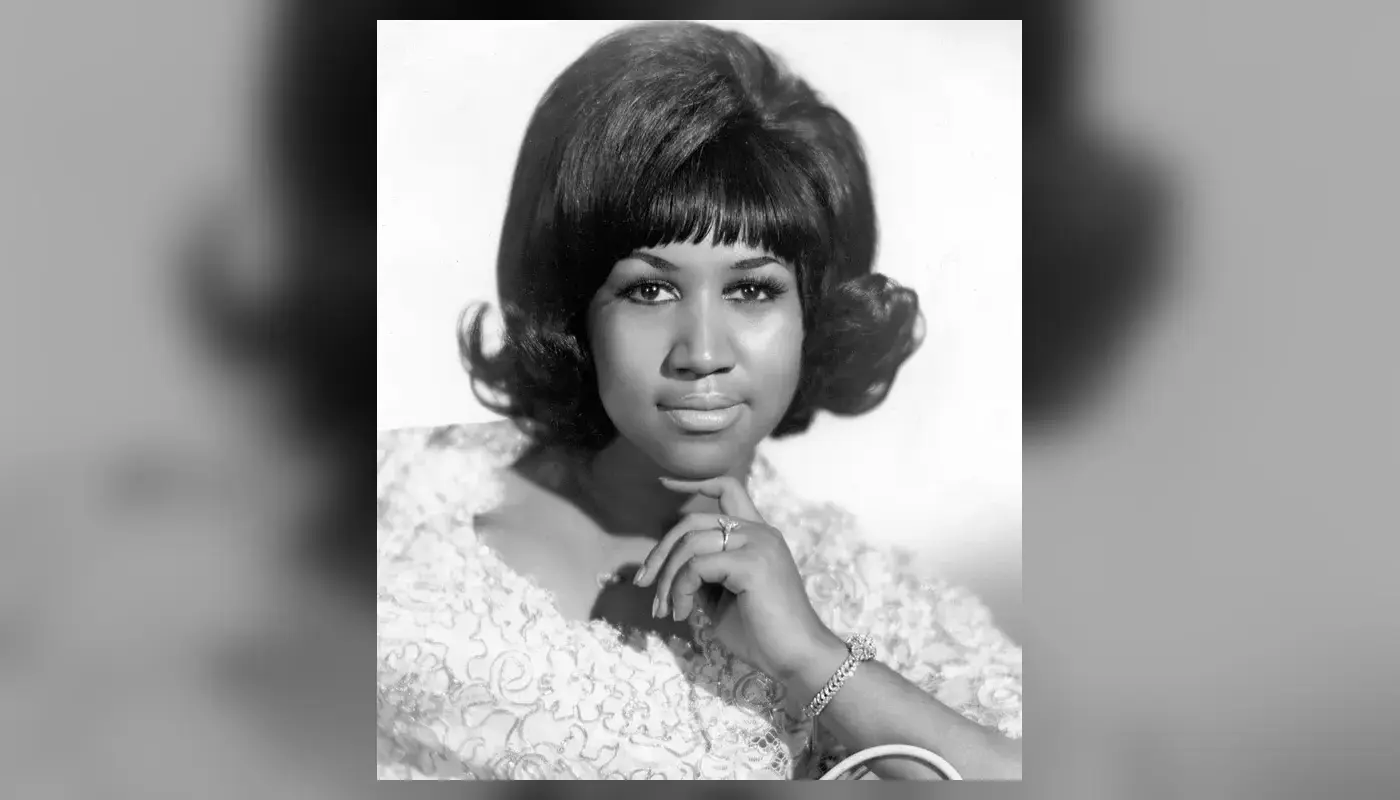
Aretha Franklin: stage presence through the years
Every image in this gallery shows the artist featured here. Pictures from different periods are placed together to illustrate changes across the career; no other performer is substituted.

Atlantic and the Muscle Shoals turning point
Recorded at FAME Studios in Muscle Shoals in 1967, “I Never Loved a Man (The Way I Love You)” brought her identity into focus through her piano, gospel intensity and a Southern rhythm section. The session was brief, but it established the direction of the Atlantic years.
She turned Otis Redding’s “Respect” into a statement of women’s self-esteem, sexual independence and a demand for social rights. The spelled-out refrain and the backing-vocal response became original elements of her interpretation.
Queen of Soul
“Chain of Fools”, “Think”, “(You Make Me Feel Like) A Natural Woman” and “Ain’t No Way” showed her range from forceful rhythm songs to vulnerable ballads. Her sisters Carolyn and Erma made important contributions through songwriting and vocals during this period.
Marital problems and pressure from work complicated Franklin’s private life. Yet she gained control on stage and in the studio. Playing piano, participating directly in arrangements and bringing her own experience to a song distinguished her from an ordinary interpreter.
The social and musical legacy
Family connections to the civil rights movement and her support for Martin Luther King Jr. joined the call for freedom in her music. Franklin placed Black women’s experience at the centre of mainstream pop and set technical, emotional and political standards for soul singing.
Gospel training and lessons from the Columbia years
In her father C. L. Franklin’s Detroit church, Aretha grew up close to Mahalia Jackson, Clara Ward and other leading gospel figures. Early recordings at the piano developed her improvisation, call-and-response and ability to make words personal as well as the power of her voice. Columbia placed her between jazz, pop standards and light R&B. These valuable recordings nevertheless fell short of capturing the full force of her identity.
Atlantic’s Jerry Wexler placed Franklin in an environment where she played her own piano, kept her gospel roots visible and worked with a more direct rhythm section. The first Muscle Shoals session was short, but “I Never Loved a Man” opened a new period. The recordings completed in New York built their arrangements around her voice instead of fitting it into a commercial mould.
Respect, women’s autonomy and performance
In rearranging Redding’s “Respect”, Franklin added the spelled-out refrain and the answering backing vocals. A male narrator’s demand for respect at home became a woman’s declaration of independence and reciprocity. The song became associated with civil rights and women’s movements, drawing its power from the everyday demand for equality within a relationship.
The vocal contributions of her sisters Carolyn and Erma, the circle around King Curtis and Atlantic’s players brought family and professional networks together in Franklin’s studio language. Violence in her private life, marriage and the pressure of relentless work were not always discussed openly, but they intertwined with the vulnerability and resistance of her interpretations. By the end of the 1960s, the title “Queen of Soul” expressed cultural authority as well as vocal range.
Selected recordings for exploring the decade
This chronological selection follows the career’s direction, changes in sound and major turning points across the decade. It is a listening route rather than a ranking of the best songs. Individual recording features will be linked as they become available.
Won’t Be Long
An early example of gospel fire in the Columbia years.
I Never Loved a Man (The Way I Love You)
The raw, intense soul recording that opened the Atlantic period.
Respect
Transformed a cover into an anthem of women’s freedom and Black pride.
(You Make Me Feel Like) A Natural Woman
Made the Carole King–Gerry Goffin song into a personal masterpiece.
Chain of Fools
A major hit driven by sharp guitar and gospel call-and-response.
Think
Among her most direct statements as a songwriter on the theme of freedom.
Ain’t No Way
A vulnerable, controlled vocal on Carolyn Franklin’s composition.
The Weight
A powerful gospel-soul interpretation of the Band’s song.
Explore original Oldies Radyo designs
All the T-shirt, mug and wallpaper previews shown here come from Oldies Radyo’s Etsy listings.

1964 British Invasion Wallpaper
An original Oldies Radyo design bringing the London beat scene, young guitar bands and the energy of 1964 into the music room.
View on Etsy →
1968 Peace, Love & Groovy Wallpaper
An original Oldies Radyo design inspired by 1968, with flowers, peace signs, guitars and the period’s spirit of freedom.
View on Etsy →
Mods vs Rockers T-shirt
An original Oldies Radyo design recalling the famous 1960s rivalry between scooter and motorcycle youth cultures.
View on Etsy →- Rock & Roll Hall of Fame — Aretha Franklin
- GRAMMY — Aretha Franklin
- Encyclopaedia Britannica — Aretha Franklin
These articles were originally written in Turkish for Oldies Radyo through comparisons of international institutional sources and archives. This English edition preserves their scope and editorial approach.
Related 1960s artist features