The Rolling Stones
British R&B / Blues Rock / Rock
Emerging from London’s blues scene, the Rolling Stones turned the inheritance of American blues and rhythm and blues into a defiant British rock identity during the 1960s.


The story through the 1960s
Emerging from London’s blues scene, the Rolling Stones turned the inheritance of American blues and rhythm and blues into a defiant British rock identity during the 1960s.
Emerging from London’s blues scene
Mick Jagger and Keith Richards’s childhood friendship became a musical partnership after they met again at Dartford station. Brian Jones formed the band and named it after a Muddy Waters song. It developed around Alexis Korner’s London blues scene; Charlie Watts and Bill Wyman completed the classic line-up.
The first repertoire drew on Black American performers including Chuck Berry, Bo Diddley, Jimmy Reed and Muddy Waters. Those choices helped lead British teenagers back to the sources of blues and R&B while shaping the group’s tough, club-bred character.
A contrasting image of stardom
Manager Andrew Loog Oldham presented them as a more dangerous alternative to the Beatles’ neat, approachable image. Press questions about allowing a daughter to marry a Rolling Stone fed that rebellious identity. Records such as “It’s All Over Now” and “The Last Time” marked the movement from covers to hits of their own.
In 1965, “(I Can’t Get No) Satisfaction” became their worldwide signature, built on Richards’s fuzz-guitar riff and Jagger’s restless response to consumer culture. Jagger–Richards soon produced songs as different as “Get Off of My Cloud”, “19th Nervous Breakdown” and “Paint It, Black”.
The Rolling Stones: stage presence through the years
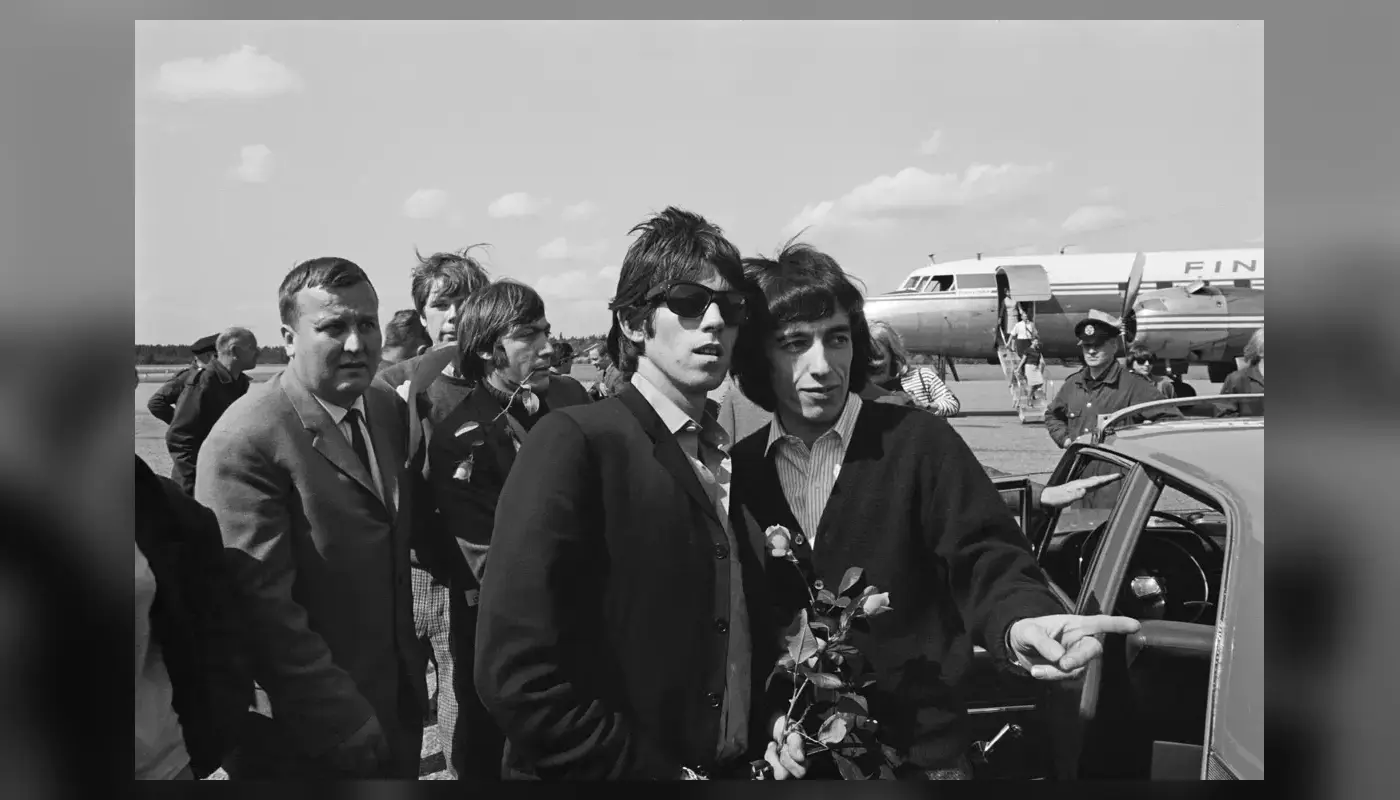
These photographs follow the band’s own career. Images from different periods are placed together to show changes in appearance and stage presence.

Experiment, scandal and pressure
Between 1966 and 1967, Aftermath, Between the Buttons and Their Satanic Majesties Request widened the blues vocabulary through sitar, marimba, piano and psychedelic production. Drug prosecutions, police raids and sensational coverage created pressures that often threatened to overshadow the music.
Jones’s health, dependency and difficulties with his role in the band grew more serious. His command of several instruments had brought important colours to early recordings, but his influence diminished within a songwriting structure centred on Jagger and Richards. His death shortly after leaving in 1969 was one of the decade’s dark endings.
Back to the roots and new peaks
Beggars Banquet returned to blues, country and acoustic roots with a sharper songwriting voice. “Jumpin’ Jack Flash” and “Street Fighting Man” carried the social tension of 1968 through their music and imagery. Let It Bleed closed the decade forcefully, opening onto new guitarist Mick Taylor’s arrival and combining American roots music with a dark rock atmosphere.
The 1969 Altamont concert became a symbolic confrontation between the ideals of 1960s counterculture and the realities of violence and disorganisation. The Stones ended the decade making both the appeal and the dangers of rock stardom visible.
The musical legacy
They developed a lasting rock language from blues repertoire through riffs, stage presence and endurance as a band. Jagger’s physical performance, Richards’s open tunings and riffs, Watts’s economical drumming and a rough yet balanced sound reached into garage rock, hard rock and beyond.
Blues inheritance, songwriting and studio identity
The early band drew on Muddy Waters, Howlin’ Wolf, Chuck Berry, Slim Harpo and Bo Diddley. In introducing Black American music to new young listeners, it also became part of continuing debates about royalties, acknowledgement and the visibility enjoyed by white British bands. As the Stones recognised the need to develop beyond interpretation, Oldham encouraged Jagger and Richards to write together.
The progression from “The Last Time” through “Satisfaction”, “Paint It, Black” and “Jumpin’ Jack Flash” traces the growth of a blues club band into a rock group with its own riffs, lyrics and studio language. Jones added sitar, marimba, dulcimer and different wind instruments to the palette. Producers and arrangers including Jack Nitzsche and Jimmy Miller shaped the recording identity at different stages.
Image, legal troubles and a changing line-up
The dangerous image was partly a deliberate management and press strategy, positioning the group against the Beatles’ more orderly appearance. The 1967 raids, trials and newspaper campaigns, however, turned that image into a real debate about personal freedom and state intervention. “We Love You” reflected the band’s sardonic, solidaristic response to pressure.
Jones’s worsening personal difficulties, irregular studio participation and the shift in power within the group led to his departure in 1969. His death soon afterwards became a dark symbol of the decade. Taylor’s arrival and the Hyde Park concert marked a transition involving both grief and rebuilding. Violence at Altamont then exposed the limits of an idealistic concert culture.
Selected recordings for exploring the decade
This chronological selection follows the career’s direction, changes in sound and major turning points across the decade. It is a listening route rather than a ranking of the best songs. Individual recording features will be linked as they become available.
It’s All Over Now
The first British number one, firmly rooted in R&B.
The Last Time
An early original hit showing the Jagger–Richards partnership beginning to mature.
(I Can’t Get No) Satisfaction
A defining rock anthem built on a fuzz riff and frustration with modern consumption.
Paint It, Black
Sitar, dark lyrics and a driving rhythm brought worldwide success.
Jumpin’ Jack Flash
A vivid announcement of the return to blues-based force.
Sympathy for the Devil
History, evil and samba rhythm combined in a provocative narrative.
Gimme Shelter
The fear and violence of the decade’s closing years brought into focus.
Explore original Oldies Radyo designs
All the T-shirt, mug and wallpaper previews shown here come from Oldies Radyo’s Etsy listings.

1964 British Invasion Wallpaper
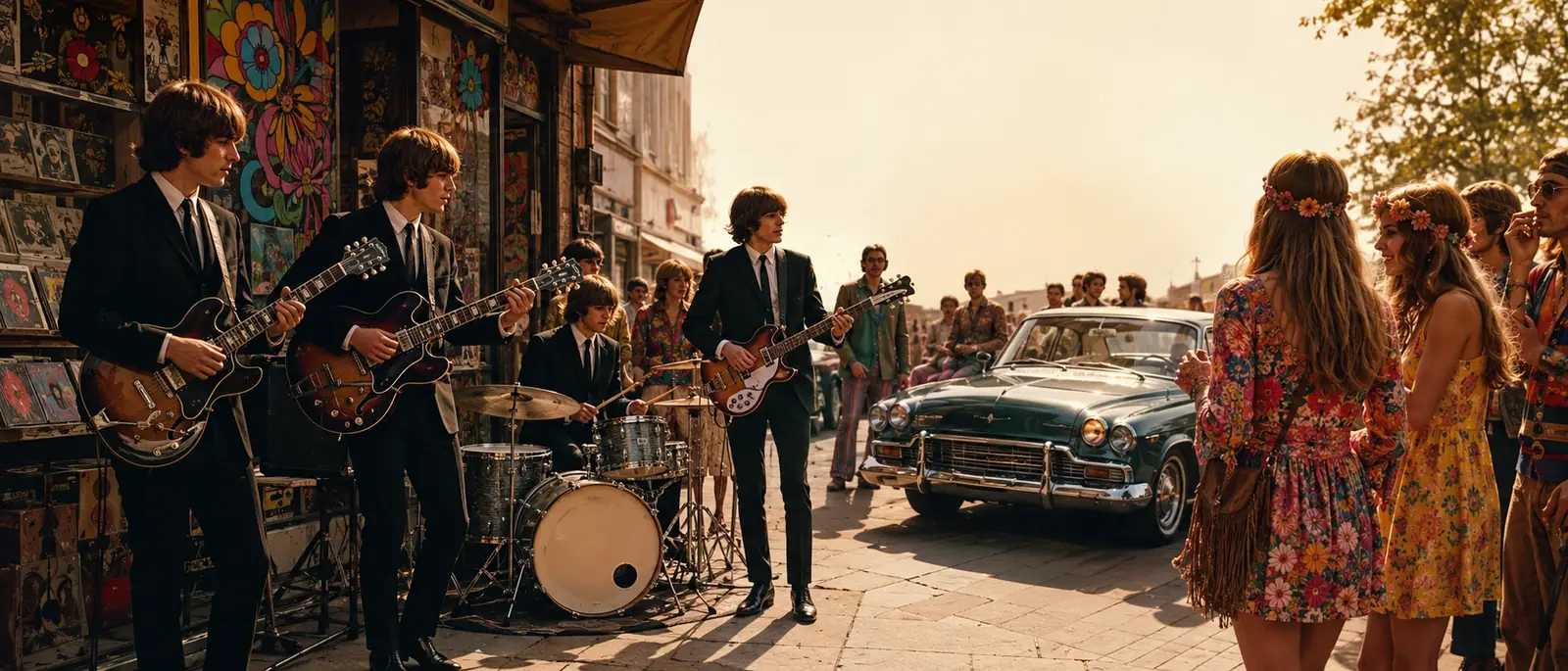
An original Oldies Radyo design bringing the London beat scene, young guitar bands and the energy of 1964 into the music room.
View on Etsy →
1968 Peace, Love & Groovy Wallpaper
An original Oldies Radyo design inspired by 1968, with flowers, peace signs, guitars and the period’s spirit of freedom.
View on Etsy →
Mods vs Rockers T-shirt
An original Oldies Radyo design recalling the famous 1960s rivalry between scooter and motorcycle youth cultures.
View on Etsy →- Rock & Roll Hall of Fame — The Rolling Stones
- The Rolling Stones — Official
- Encyclopaedia Britannica — The Rolling Stones
These articles were originally written in Turkish for Oldies Radyo through comparisons of international institutional sources and archives. This English edition preserves their scope and editorial approach.
Related 1960s artist features