British Blues Boom
London and Britain’s clubs

The club scene around Alexis Korner and Cyril Davies connected young British musicians with the repertoire of Black American blues performers including Muddy Waters, Howlin’ Wolf, Jimmy Reed and B.B. King. The Rolling Stones, the Yardbirds, John Mayall’s Bluesbreakers, the Animals, Fleetwood Mac and Cream drew on these sources at different stages. Some retained traditional blues forms; others moved towards hard rock through greater volume, extended guitar solos and psychedelic experiments. The movement created renewed European interest in American blues masters. Yet the greater commercial visibility of white British bands also raised questions about recognition of the source artists and economic inequality.
Artists from the British Blues Boom scene
Explore the different sides of this music alongside archive images of its artists and bands.


Clubs, collectors and rediscovery
The British blues boom emerged from post-war young people’s passion for collecting and discovering records by Muddy Waters, Howlin’ Wolf, B.B. King, Elmore James and Jimmy Reed. Korner and Davies’ Blues Incorporated circle became a London meeting point for musicians who would join different bands. In Britain, blues offered both a window into Black American culture and a form of expression regarded as more “real” than commercial pop.
The era and culture around the music
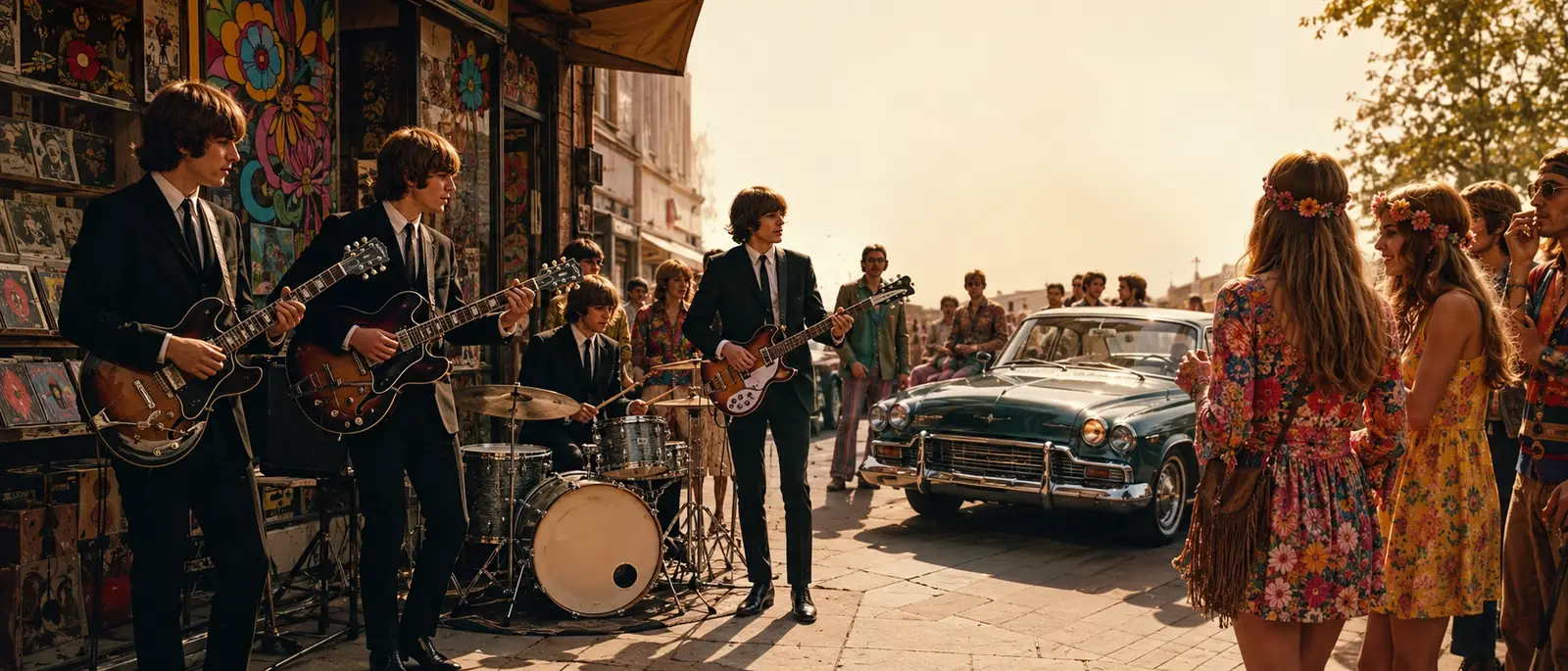
The music was shaped by more than recordings: venues, technology, fashion and ways of listening all helped define the sound of the period.


The emergence of the guitar hero
While the Rolling Stones brought blues into pop singles, the Yardbirds developed feedback and experimental guitar tones through the periods of Eric Clapton, Jeff Beck and Jimmy Page. John Mayall’s Bluesbreakers, particularly the 1966 album with Clapton, helped establish the loud Les Paul–Marshall sound. Cream expanded improvisation, while Peter Green’s Fleetwood Mac took another path through emotional economy and subtle tone.
The relationship with the sources and the debate
British bands introduced Black American blues performers to new generations, helping some of the masters gain European tours and new income. Questions of royalties, visibility and cultural appropriation remained, however: white British musicians often achieved greater commercial success than their sources. This contradiction makes the history of blues rock a creative and ethical story that needs to be read together.
The club network and its musical sources
Korner’s Blues Incorporated and Davies’ circle served as an open school where young London musicians could learn the Chicago blues repertoire. Players sharing stages at venues such as the Marquee and Ealing Club later dispersed into the Rolling Stones, Cream, the Yardbirds, Fleetwood Mac and Mayall’s Bluesbreakers. They openly expressed admiration for the Black American masters. Their greater earnings and visibility nevertheless kept the tension between cultural exchange and an unequal industry in view.
The idea of the guitar hero
Clapton’s loud Les Paul–Marshall tone on Bluesbreakers with Eric Clapton, Green’s economical and emotional lines, Beck’s feedback and fuzz experiments, and Page’s riff-centred approach created distinct models of guitar playing. Within this scene, blues became more than a song repertoire: extended solos, individual tone and improvisation offered ways to establish a personal identity. Much of the hard rock and arena-guitar culture of the 1970s grew from this 1960s network of clubs.
The key artists behind this sound
Explore original Oldies Radyo designs
All the T-shirt, mug and wallpaper previews shown here come from Oldies Radyo’s Etsy listings.

1964 British Invasion Wallpaper
An original Oldies Radyo design bringing the London beat scene, young guitar bands and the energy of 1964 into the music room.
View on Etsy →
1968 Peace, Love & Groovy Wallpaper
An original Oldies Radyo design inspired by 1968, with flowers, peace signs, guitars and the period’s spirit of freedom.
View on Etsy →
Mods vs Rockers T-shirt
An original Oldies Radyo design recalling the famous 1960s rivalry between scooter and motorcycle youth cultures.
View on Etsy →Related 1960s features