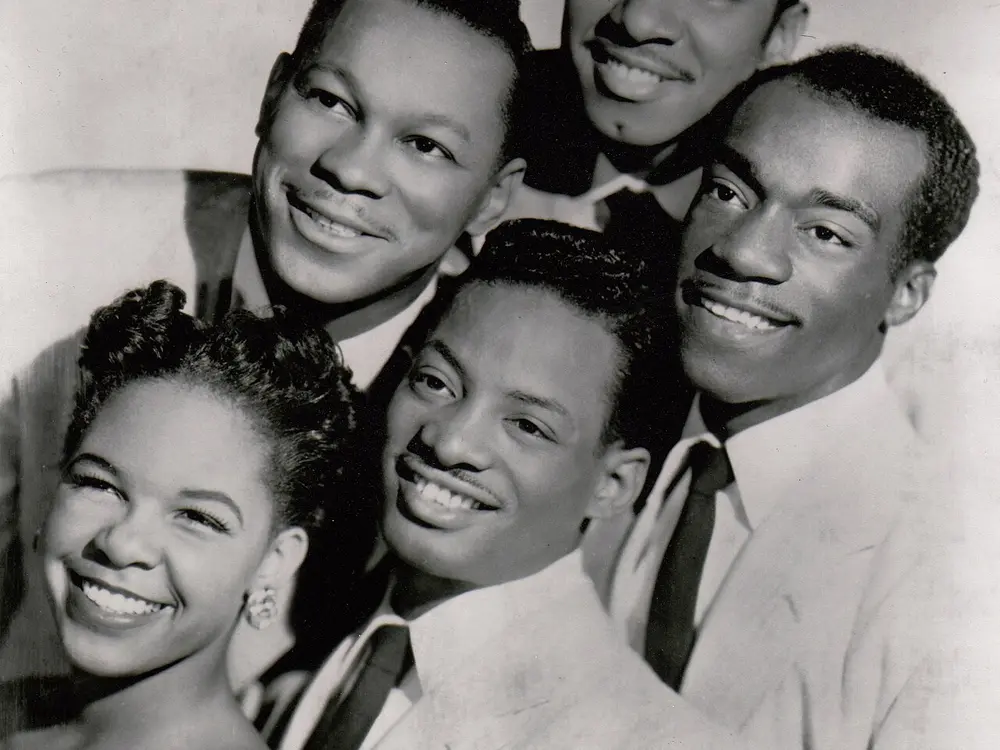
The Platters
Doo-wop / Pop

With elegant harmonies and lavish ballads, the Platters became one of the most successful groups to bring doo-wop to mainstream pop listeners. They built a bridge between street-corner vocal traditions and orchestral pop.
Their records showed that doo-wop could be a sophisticated pop art demanding skilled interpretation and arrangement. Tony Williams’s soaring tenor was the group’s unmistakable signature.
Where did the sound come from?
The Platters formed in Los Angeles in 1952. Early line-ups and recordings for Federal Records met with limited success, before songwriter and manager Buck Ram reorganised the group. Tony Williams’s high tenor lead, framed by the harmonies of David Lynch, Paul Robi, Herb Reed and Zola Taylor, established the distinctive line-up.
Ram wanted the group to be known for nightclub elegance and a repertoire of pop standards alongside their street-corner harmonies. Moving to Mercury Records gave that approach a national audience.
The years that changed the course
“Only You (And You Alone)” and “The Great Pretender” brought major crossover success in 1955. “My Prayer”, “Twilight Time” and “Smoke Gets in Your Eyes” showed that their romantic ballads could succeed on the R&B and pop charts simultaneously.
International tours, television and film appearances made the Platters one of the best-known groups of the doo-wop era. Zola Taylor’s voice also gave their vocal blend and stage image a distinction from the predominantly male vocal groups around them.
What made the sound instantly recognisable?
Williams’s dramatic tenor combines the clear diction of traditional pop with gospel-derived lifts. Rather than exaggerating rhythmic syllables, the backing voices provide a sustained, almost orchestral cushion. Piano, strings and a restrained rhythm section complete the group’s sumptuous sound.
That approach broadened the idea of doo-wop as informal street music for teenagers. The Platters brought vocal-group harmony into adult pop and the repertoire of international ballrooms.
The world behind the stage
Their crossover success mattered in a segregated radio and concert market, but they still faced racism on tour and in daily life. The later use of the Platters name by different line-ups also raised questions about ownership and artistic control in vocal groups.
Turning points
Under Buck Ram’s management and arrangement approach, the Platters moved from the Los Angeles vocal-group scene to international pop stardom. Williams’s high tenor anchored the 1955 successes “Only You” and “The Great Pretender”; “My Prayer”, “Twilight Time” and “Smoke Gets in Your Eyes” expanded the romantic repertoire. Mercury’s distribution, television and film appearances helped a group rooted in doo-wop reach the adult pop market. Later changes in membership and disputes over the name exposed the tension between a brand and the actual ensemble.
Inside the studio
The Platters’ recordings emphasise a carefully balanced studio sound and orchestral pop aesthetics. Taylor, Lynch, Robi and Reed provide a soft frame around Williams’s tenor. Piano introductions, strings and restrained rhythms offered older standards afresh to the young, romantic listeners of the 1950s. Taylor’s visible role made the Platters an important example of a mixed-gender vocal ensemble on the mainstream stage.
Who carried the influence forward?
The Platters showed how freely doo-wop and traditional pop could overlap. Their records continued to circulate across settings from weddings to radio programmes, while Europe and Asia also embraced their sound in the early rock era. Their success reflects a period when Black artists used elegant stage presentation to challenge prejudices in the white mainstream market. The precision of their harmonies demonstrated doo-wop’s scope beyond raw teenage music.
A listening guide to the 1950s
This is a listening route, not a ranking of the best songs. These starting points trace the artist’s development across the decade, different sides of the music and its place in history.
Only You (And You Alone)
The classic doo-wop ballad shaped by Tony Williams’s tenor.
The Great Pretender
Dramatic storytelling and finely matched harmonies.
My Prayer
An older standard transformed into a modern vocal-group hit.
Twilight Time
An elegant arrangement creates a romantic night-time atmosphere.
Smoke Gets in Your Eyes
A Broadway standard given new life around the world.
The legacy in music history
They made doo-wop harmony part of the international pop repertoire.
The Platters’ musical identity took shape in the 1950s and continued to resonate in later decades through fresh interpretations of the repertoire, echoes of the stage approach and direct influence on other musicians. In this dossier, Oldies Radyo considers the group as a creative force in the evolution of popular music, alongside the nostalgic appeal.
- Rock & Roll Hall of Fame – The Platters
- Vocal Group Hall of Fame – The Platters
- Library of Congress – The Platters search
These articles were originally written in Turkish for Oldies Radyo through comparisons of international institutional sources and archives. This English edition preserves their scope and editorial approach.
Related 1950s artist features