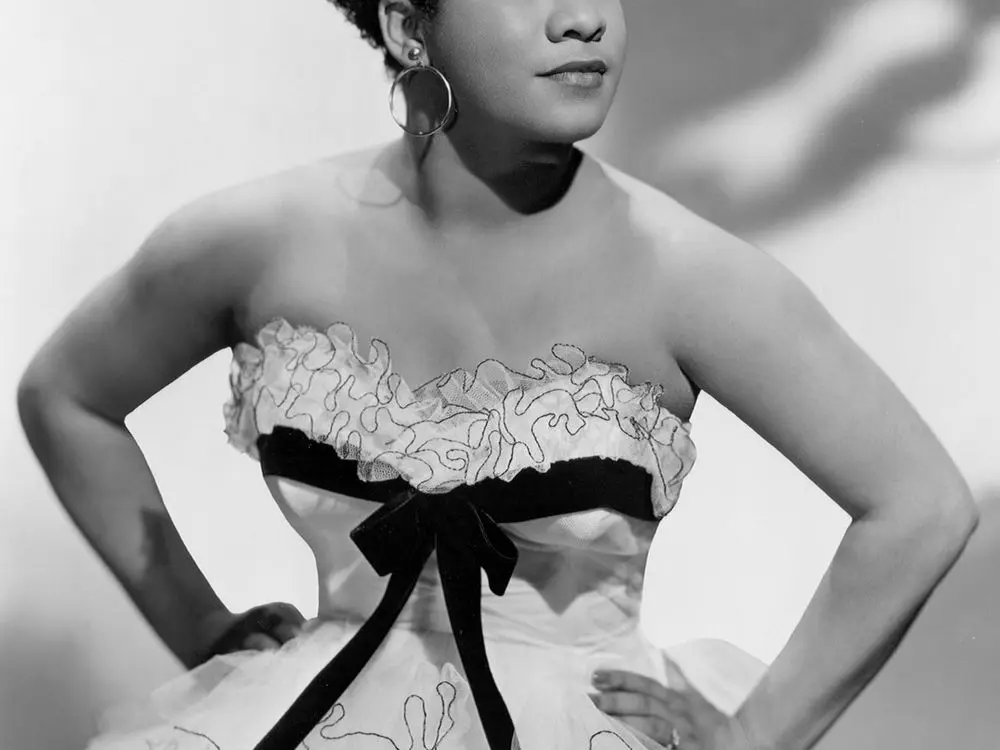
Ruth Brown
Rhythm and Blues

With her powerful, flexible voice and rhythmic delivery, Ruth Brown became one of the leading stars of the 1950s R&B charts. Her success contributed so much to Atlantic Records’ rise that the label was informally known as the House That Ruth Built.
Brown could bring blues grit and pop sensitivity together in the same record. She raised the profile of female vocalists on the R&B scene and opened an important path for the soul singers who followed.
Where did the sound come from?
Born Ruth Alston Weston, she grew up with church music in Portsmouth, Virginia. Despite her father’s opposition to secular music, she left home young and sang in clubs and touring companies. She absorbed the influence of jazz vocalists such as Sarah Vaughan and Billie Holiday alongside the direct storytelling of the blues.
Atlantic executives heard her at Washington’s Crystal Caverns club. A car accident delayed her first recordings; after recovering, she made “So Long”, which launched her breakthrough in 1949. “Teardrops from My Eyes” brought a major rise on the R&B chart in 1950.
The years that changed the course
Hits including “5-10-15 Hours”, “(Mama) He Treats Your Daughter Mean”, “Oh What a Dream” and “Mambo Baby” made Brown one of the most consistent R&B stars of the decade. Her success was so important to Atlantic’s growth that the label was known for years as the House That Ruth Built.
Brown combined strong blues accents with an agile delivery that reached towards pop. That flexibility carried her beyond jukeboxes, Black radio and the R&B charts to a wider pop audience.
What made the sound instantly recognisable?
A slight nasal edge, sudden rises and phrasing that plays with the beat give her upbeat songs a sharp personality. In ballads, the same voice becomes vulnerable and dramatic. She does more than sing forcefully: rhythmic details bring out the humour and anger in the words.
On her Atlantic recordings, saxophone, piano and a clear rhythm section leave space around the voice. That production approach also became fundamental to later soul records.
The world behind the stage
Brown’s later struggle for royalties and fair contracts exposed the precarious economic conditions in which 1950s R&B stars worked, even after major hits. Her pioneering work on industry rights is as significant as her artistic legacy.
Turning points
A serious car accident delayed the start of Brown’s Atlantic career, but “So Long” and then “Teardrops from My Eyes” quickly placed her at the centre of R&B. Throughout the 1950s, “5-10-15 Hours”, “(Mama) He Treats Your Daughter Mean”, “Mambo Baby” and “Lucky Lips” sustained her chart success. Tours, theatres and package shows carried her voice across the country. Yet the accounting and royalty systems of the time meant that large sales did not bring artists a matching income. Her later campaign for musicians’ rights grew out of those experiences.
Inside the studio
Brown’s singing combined blues grit, jazz phrasing and pop clarity. Atlantic’s New York sessions used strong tenor saxophones, piano and a tight rhythm section, with introductions that were instantly recognisable on a jukebox. Small breaks in the voice, mocking accents and sudden lifts turned lyrics into dramatic characters. In an R&B market dominated by male narrators, she offered an angry, humorous and confident woman’s perspective on relationships.
Who carried the influence forward?
Despite her substantial contribution to Atlantic’s growth, Brown long failed to receive the financial rewards she deserved. Her role in establishing the Rhythm & Blues Foundation in the 1980s, and her work on older artists’ royalties, made her an industry reformer as well as a historic vocalist. Etta James, LaVern Baker and later soul singers drew on her expressive power. Brown’s story makes the struggle for the rights behind the hits part of music history too.
A listening guide to the 1950s
This is a listening route, not a ranking of the best songs. These starting points trace the artist’s development across the decade, different sides of the music and its place in history.
Teardrops from My Eyes
An early major hit that helped establish Atlantic’s R&B identity.
5-10-15 Hours
A dance rhythm and a direct expression of female desire.
(Mama) He Treats Your Daughter Mean
Humour, anger and a powerful vocal performance.
Oh What a Dream
Even a softer delivery retains her rhythmic identity.
Lucky Lips
A cheerful, memorable hit reaching towards the pop market.
The legacy in music history
One of the great female voices at the artistic and commercial centre of R&B.
Ruth Brown’s musical identity took shape in the 1950s and continued to resonate in later decades through fresh interpretations of the repertoire, echoes of the stage approach and direct influence on other musicians. In this dossier, Oldies Radyo considers the artist as a creative force in the evolution of popular music, alongside the nostalgic appeal.
- Rock & Roll Hall of Fame – Ruth Brown
- National Endowment for the Arts – Ruth Brown
- Library of Congress – Ruth Brown search
These articles were originally written in Turkish for Oldies Radyo through comparisons of international institutional sources and archives. This English edition preserves their scope and editorial approach.
Related 1950s artist features