The Doors
Psychedelic Rock / Blues Rock
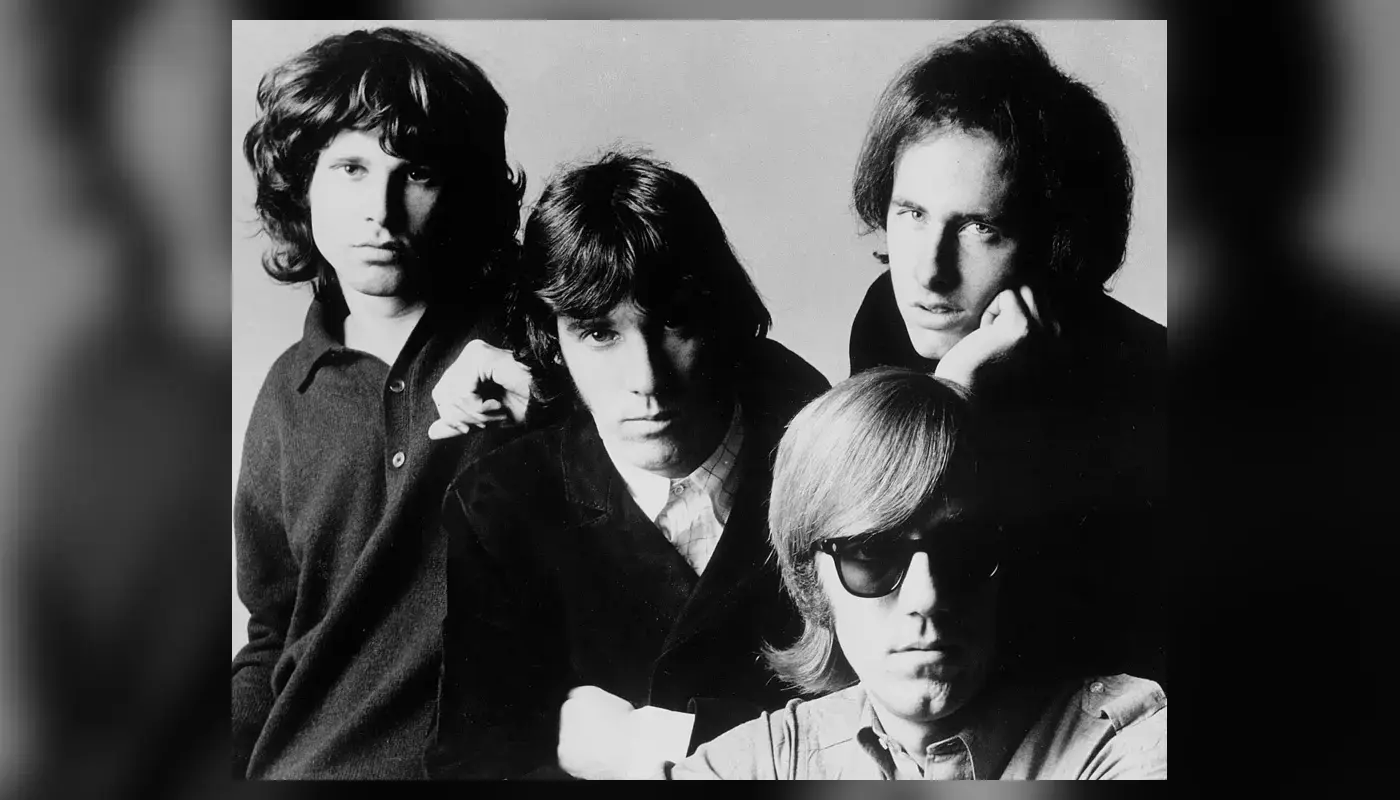
The Doors joined Jim Morrison’s poetic, dangerous stage persona to Ray Manzarek’s keyboards, Robby Krieger’s guitar and John Densmore’s jazz-sensitive drumming.

The story through the 1960s
The Doors joined Jim Morrison’s poetic, dangerous stage persona to Ray Manzarek’s keyboards, Robby Krieger’s guitar and John Densmore’s jazz-sensitive drumming.
The beginnings in Los Angeles
Morrison and Manzarek knew each other through UCLA’s film community. The idea of turning Morrison’s poems, written at Venice Beach, into songs became a band. With Krieger and Densmore joining, the distinctive line-up took shape without a bass guitarist, using keyboard bass instead.
Their time on stage at the Whisky a Go Go developed the extended improvisations and Morrison’s theatrical storytelling. Being dismissed from the club over the Oedipal passage in “The End” reinforced their controversial identity from the beginning.
The first album and the breakthrough
The 1967 album The Doors set out their blend of blues, jazz, poetry and psychedelia through “Break On Through”, “Light My Fire” and “The End”. Krieger’s “Light My Fire”, with its extended, jazz-influenced middle passage from Manzarek and Densmore, took the album version beyond the boundaries of a single.
Their refusal to change the word “higher” on The Ed Sullivan Show became a symbol of their conflict with television censorship. Morrison rapidly emerged as one of rock’s most charismatic and unpredictable figures.
Productivity and darkness
Strange Days, Waiting for the Sun and The Soft Parade followed in quick succession. “People Are Strange”, “When the Music’s Over”, “Five to One” and “Touch Me” showed the band moving between dark cabaret, political unease and orchestral pop.
The strings and brass on The Soft Parade divided listeners. By the end of 1969, work on Morrison Hotel was bringing the band back towards a more direct blues-rock sound.
Miami and the pressure on the band
Morrison’s drinking and determination to push boundaries made concerts increasingly risky. Allegations of indecent conduct after the 1969 Miami show led to cancelled touring dates and placed the band’s public reputation under intense pressure.
The tension between Morrison’s seriousness as a poet and his image as a rock star sat at the heart of the story. The other three members tried to maintain musical discipline, but incidents on stage often overshadowed the recordings.
The influence beyond the songs
The Doors presented psychedelic rock as a dark theatre of death, desire, alienation and authority, extending well beyond the colourful pleasures of the counterculture. Their keyboard-led sound and Morrison’s poetic presence influenced later gothic and alternative rock.
Los Angeles, poetry and collective arrangements
The band’s dark identity came from more than Morrison’s stage personality. Manzarek’s classically and blues-influenced keyboards, Krieger’s guitar sources, including flamenco, and Densmore’s jazz sensibility created a broad sonic space without a bass guitarist. Songs often developed through collective arrangements in the rehearsal room.
The Sunset Strip clubs and their residency at the Whisky a Go Go allowed extended pieces to take shape before an audience. The difference between the shortened “Light My Fire” single and its long album version reflects changing expectations between 1960s radio formats and album listeners.
Censorship, stage crises and the Morrison myth
The refusal to alter “higher” on The Ed Sullivan Show strengthened their image as opponents of censorship. Morrison’s drinking, provocative monologues and clashes with police made concerts unpredictable. The case following the Miami concert in 1969 reflected society’s fear of rock stardom as well as disputes over what had actually happened on stage.
The mythology surrounding Morrison can obscure the other members’ contributions. The orchestral pop of “Touch Me”, the expansive arrangements on The Soft Parade and the band’s blues foundations all emerged from a collective search. The Doors embodied the dark, theatrical and potentially self-consuming side of the 1960s ideal of freedom.
Selected recordings for exploring the decade
This chronological selection follows the career’s direction, changes in sound and major turning points across the decade. It is a listening route rather than a ranking of the best songs. Individual recording features will be linked as they become available.
Break On Through (To the Other Side)
The opening manifesto of the band, driven by Latin rhythm and cutting vocals.
Light My Fire
Joined a pop hit to an extended jazz-rock improvisation.
The End
A dark culmination of poetry, drama and long-form composition.
People Are Strange
Expressed alienation through a short, theatrical pop song.
When the Music’s Over
Joined stage improvisation to political and existential intensity.
Hello, I Love You
A brief, direct and controversial major hit.
Touch Me
The orchestral pop side of the band, with brass and a strong melody.
Explore original Oldies Radyo designs
All the T-shirt, mug and wallpaper previews shown here come from Oldies Radyo’s Etsy listings.

1964 British Invasion Wallpaper
An original Oldies Radyo design bringing the London beat scene, young guitar bands and the energy of 1964 into the music room.
View on Etsy →
1968 Peace, Love & Groovy Wallpaper
An original Oldies Radyo design inspired by 1968, with flowers, peace signs, guitars and the period’s spirit of freedom.
View on Etsy →
Mods vs Rockers T-shirt
An original Oldies Radyo design recalling the famous 1960s rivalry between scooter and motorcycle youth cultures.
View on Etsy →These articles were originally written in Turkish for Oldies Radyo through comparisons of international institutional sources and archives. This English edition preserves their scope and editorial approach.
Related 1960s artist features