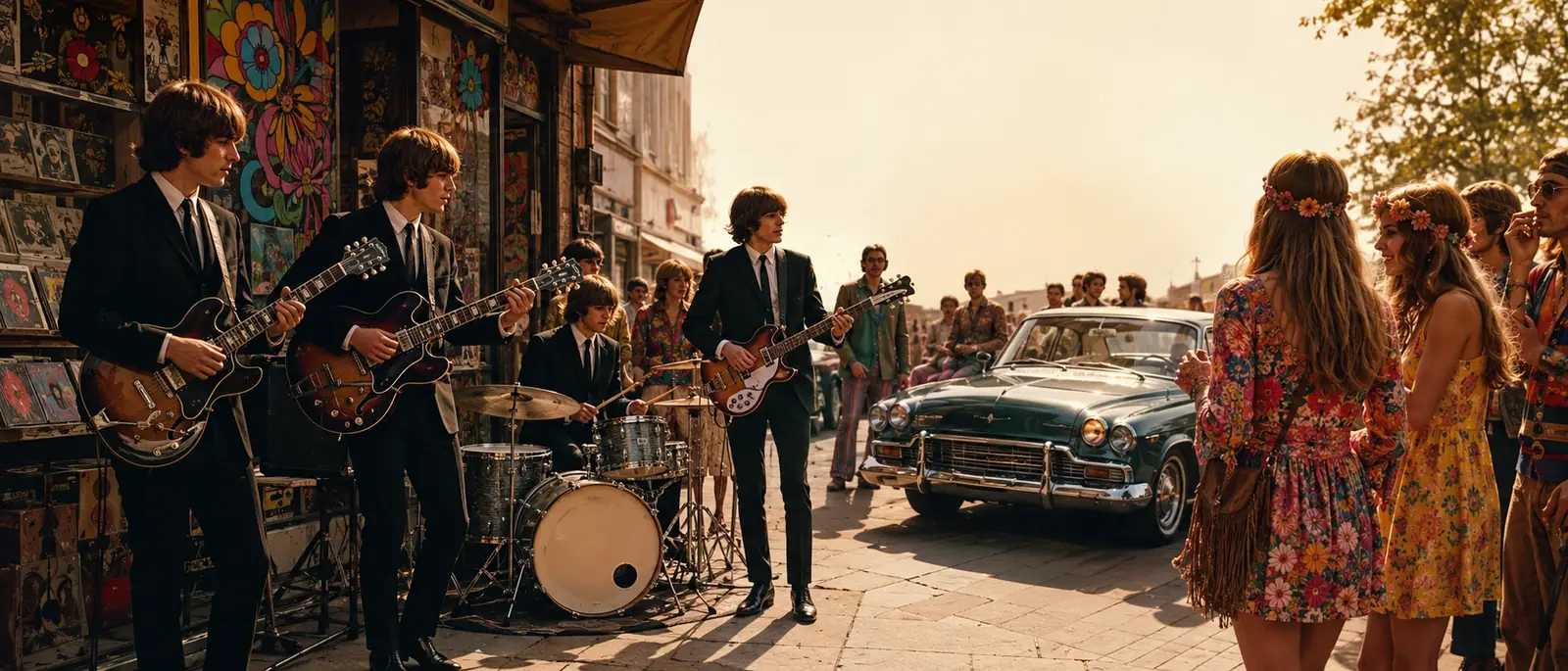
Progressive and art-rock ideas began forming before the genre had a settled name. Musicians started borrowing from classical music, jazz, psychedelia and experimental studio techniques while moving beyond the standard three-minute pop single.
Longer forms and unusual structure
Late-1960s bands increasingly used suites, extended instrumental sections and more complex harmonic movement. Pink Floyd, The Moody Blues, Procol Harum and King Crimson all represented different routes into the emerging style.
The album becomes essential
Progressive thinking depended on the LP because longer formats allowed ideas to develop across a side or an entire record. Studio technology and sequencing became part of composition.
Why it matters
These late-1960s experiments created the foundation for the full progressive-rock explosion of the early 1970s.