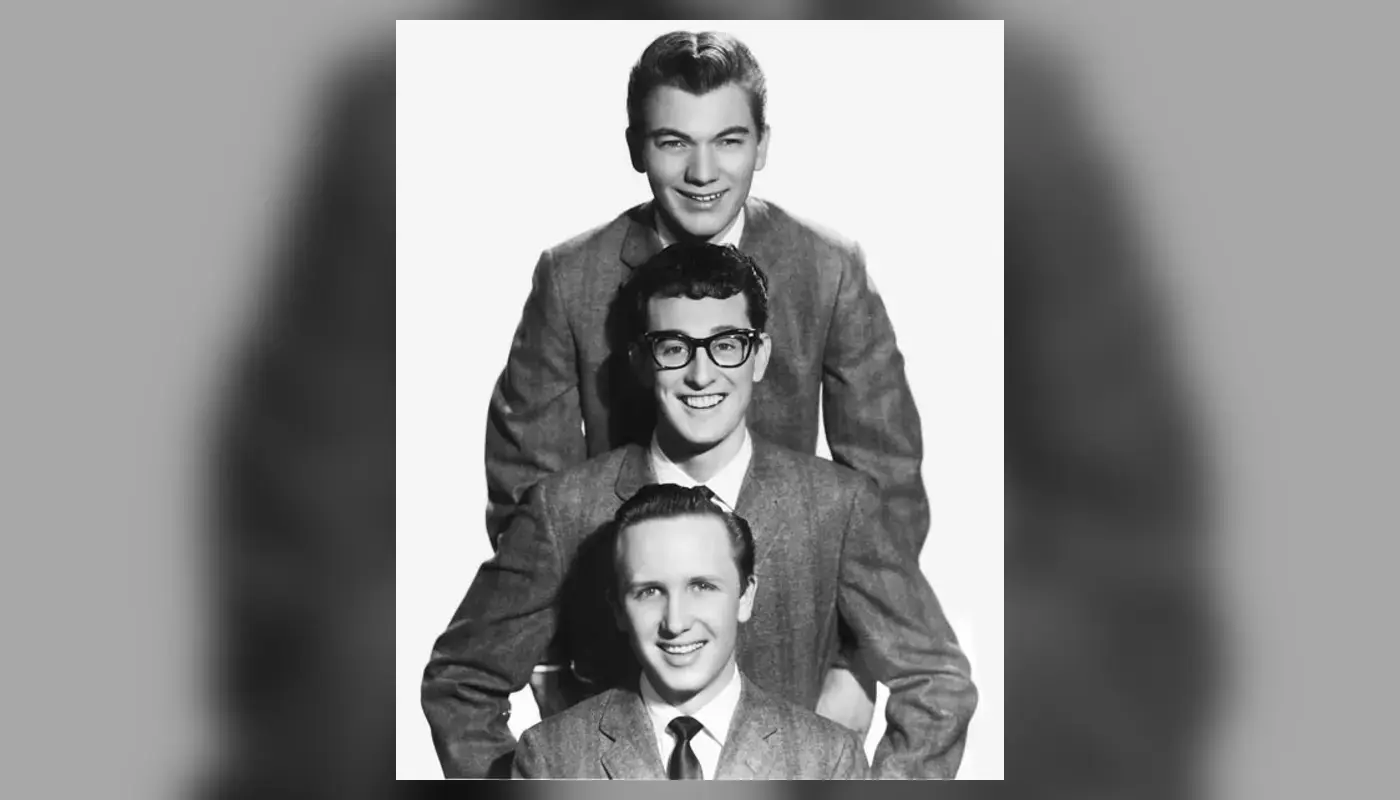
The Crickets
Rock ’n’ Roll

Working with Buddy Holly, the Crickets became one of the most influential early examples of the modern rock band built around two guitars, bass and drums.
Their band name, shared identity and commitment to playing their own songs influenced later groups, particularly the Beatles. The records were simple in outline, but inventive in the studio.
Where did the sound come from?
The Crickets grew out of Buddy Holly’s musical partnerships around Lubbock, Texas. After beginning in a country duo with Bob Montgomery, Holly turned towards rock ’n’ roll. The band formed with drummer Jerry Allison, bassist Joe B. Mauldin and rhythm guitarist Niki Sullivan developed its own sound in Norman Petty’s studio in Clovis, New Mexico.
Following unsuccessful early recordings for Decca, some releases appeared as the Crickets and others as Buddy Holly on different labels as a way around contractual restrictions. That double identity later encouraged listeners to perceive much of the band’s history as Holly’s solo career.
The years that changed the course
“That’ll Be the Day” became a major success in 1957. “Oh, Boy!”, “Maybe Baby”, “Think It Over” and “It’s So Easy” developed the band’s melodic rock ’n’ roll. The Crickets gave a visible shape to the young group that wrote its own songs and worked with guitars, bass and drums.
In late 1958, Holly broke from Petty and the band’s touring arrangements and moved to New York. The Crickets continued with changing line-ups. The 1959 plane crash ended Holly’s life, but the repertoire remained a fundamental resource for later generations, especially British beat groups.
What made the sound instantly recognisable?
Allison’s inventive drum patterns, Mauldin’s spare bass and Holly’s Fender Stratocaster give the songs a light but driving rhythm. Vocal hiccups, two-part harmonies and studio overdubs combine rockabilly energy with pop melody.
Their stage image mattered too. They appeared as a real band of musicians close in age, sharing an identity beyond the lead singer. Many later groups, including the Beatles, drew inspiration from that model in their names and working methods.
The world behind the stage
The Crickets’ story shows how individual-star narratives can obscure a band’s collective work. Holly was the central writer and singer, but the recordings’ rhythmic and instrumental identity came from collaboration.
Turning points
The Crickets emerged in 1957 as the name for the band sound Holly developed with Petty in Clovis. Allison, Mauldin and, early on, Sullivan helped shape “That’ll Be the Day”, “Oh, Boy!”, “Not Fade Away” and “Maybe Baby”. Records issued under the group name and those released as Buddy Holly came from the same musicians as part of a contractual strategy. When Holly moved to New York and left in 1958, the Crickets carried on with different line-ups. That continuity shows a band with its own repertoire and harmonic approach.
Inside the studio
Two guitars, bass and drums formed the basic arrangement, an economical set-up that became standard for later rock bands. Allison’s inventive drum parts, Mauldin’s spare bass and the vocal harmonies supported Holly’s melodies. Using the Bo Diddley rhythm on “Not Fade Away” shows the Texas country scene’s conscious engagement with Black R&B. Freedom to experiment at Clovis let the musicians develop arrangements together during recording.
Who carried the influence forward?
The Beatles’ insect-related name openly echoed the Crickets, while the Hollies took their name from Buddy Holly. The deeper legacy was a recognisable collective identity: songwriting, harmonies and instrumental roles belonged to a band. Holly’s early death naturally drew historical accounts towards him, but the Crickets were essential to the rhythmic personality of those records.
A listening guide to the 1950s
This is a listening route, not a ranking of the best songs. These starting points trace the artist’s development across the decade, different sides of the music and its place in history.
That’ll Be the Day
The breakthrough that introduced the band’s identity around the world.
Oh, Boy!
A balance of harmonies and a fast rhythm.
Not Fade Away
The Bo Diddley beat adapted to Texas rock ’n’ roll.
Maybe Baby
A melodic approach to guitar pop.
Think It Over
A maturing band sound in the piano, vocals and rhythm.
The legacy in music history
They gave a clear shape to the working model of the modern guitar band.
The Crickets’ musical identity took shape in the 1950s and continued to resonate in later decades through fresh interpretations of the repertoire, echoes of the stage approach and direct influence on other musicians. In this dossier, Oldies Radyo considers the group as a creative force in the evolution of popular music, alongside the nostalgic appeal.
- Rock & Roll Hall of Fame – The Crickets
- Buddy Holly Center – History
- Library of Congress – The Crickets search
These articles were originally written in Turkish for Oldies Radyo through comparisons of international institutional sources and archives. This English edition preserves their scope and editorial approach.
Related 1950s artist features