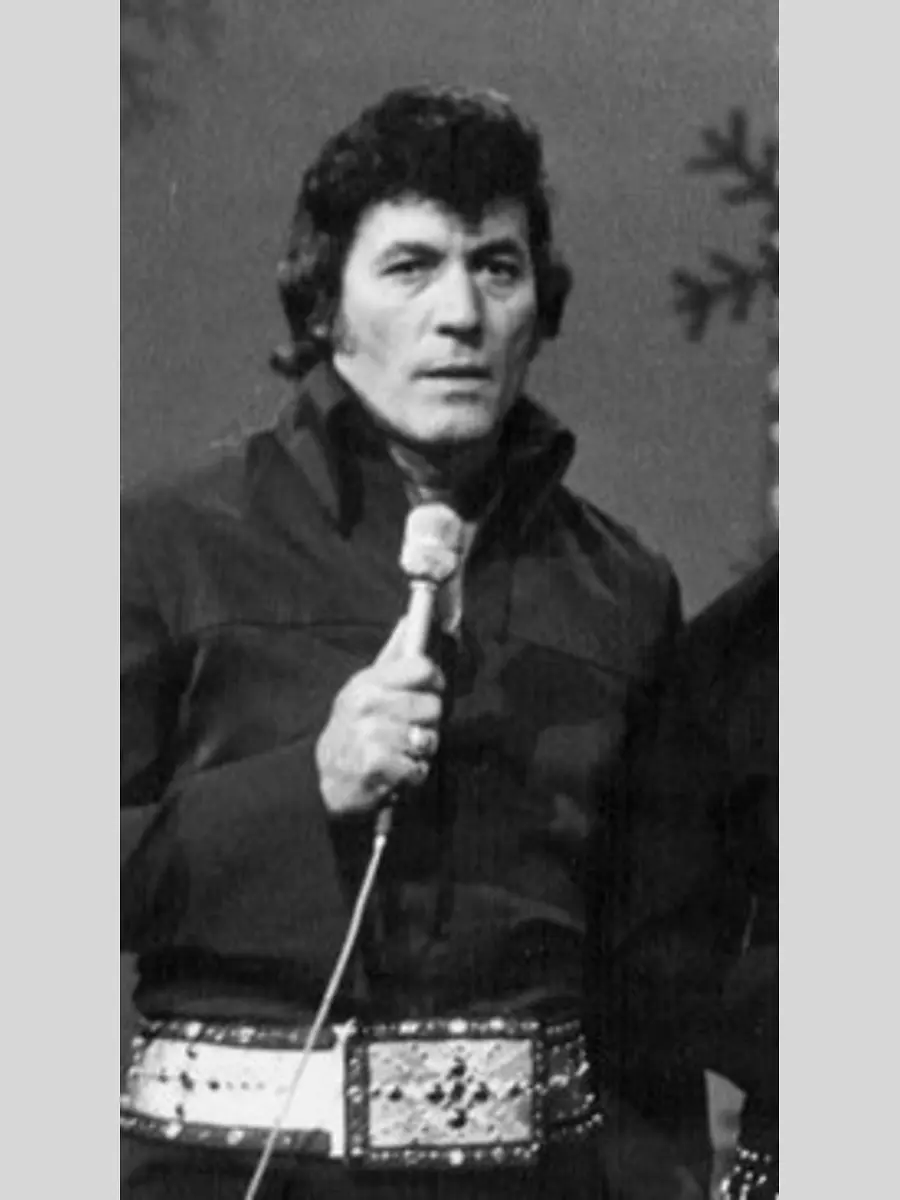
Carl Perkins
Rockabilly

Carl Perkins was one of rockabilly’s foundational songwriters and guitarists, bringing country guitar language together with Black R&B rhythms.
“Blue Suede Shoes” became one of rockabilly’s musical and cultural manifestos. Perkins’s guitar approach influenced George Harrison and many rock guitarists who followed.
Where did the sound come from?
Perkins grew up in a poor farming family in Tennessee. He learned blues guitar from Black farm workers and heard country music on Grand Ole Opry radio broadcasts. Playing honky-tonks with his brothers Jay and Clayton, he began combining fast country numbers with R&B rhythms.
After hearing Elvis Presley’s “That’s All Right”, he headed to Memphis hoping to work with Sun Records. Sam Phillips recognised the individuality of an approach built around Perkins’s own songs and guitar.
The years that changed the course
Recorded in late 1955, “Blue Suede Shoes” became a major hit on the pop, country and R&B charts in 1956. Perkins spent weeks in hospital after a car accident on the way to a television appearance; Presley’s version of the song meanwhile drew public attention elsewhere.
“Boppin’ the Blues”, “Dixie Fried”, “Matchbox” and “Everybody’s Trying to Be My Baby” reveal rockabilly’s country side with particular clarity. Perkins did not become a giant pop star, but his songs entered the repertoires of later bands.
What made the sound instantly recognisable?
His guitar uses blues bends, country double-stops and sharp rhythmic attacks. The songs combine details of rural life with dancing and teenage language. Recorded with few instruments, they retain the feeling of a live band.
Perkins’s identity as a songwriter and guitarist gave him a particular influence among musicians, alongside Presley’s broader vocal and visual appeal.
The world behind the stage
The story of “Blue Suede Shoes” shows the delicate relationship between success, chance and media exposure in rock ’n’ roll. Perkins’s historical importance lies in helping establish rockabilly’s guitar language as much as in a single hit.
Turning points
Perkins’s musical upbringing ran through cotton fields, honky-tonks and the guitar language of Black blues players. The band he formed with his brothers reached Sun Records, where “Blue Suede Shoes” became a major pop, country and R&B success in 1956. A car accident en route to a television appearance cost him a national promotional opportunity, while Presley’s version gained greater exposure. With “Boppin’ the Blues”, “Dixie Fried” and “Matchbox”, Perkins remained one of rockabilly’s strongest writers, though his career was often told in the shadow of one enormous hit.
Inside the studio
His guitar combines country picking, blues bends and crisp rhythmic accents. On the Sun sessions, Jay and Clayton’s guitar and bass support, with W. S. Holland on drums, retained the family band’s stage habits. The stops and opening phrase of “Blue Suede Shoes” speak directly to the dance floor, while “Dixie Fried” explores the darker side of Southern nightlife. His songwriting shows that rockabilly could create a strong sense of character and place as well as speed.
Who carried the influence forward?
The Beatles took Perkins’s repertoire seriously: their recordings of “Matchbox”, “Honey Don’t” and “Everybody’s Trying to Be My Baby” made his influence on British rock audible. Continuing connections with Johnny Cash and the country generation showed that rockabilly’s ties to country never broke entirely. His legacy demonstrates that commercial success and creative influence can follow different paths: a less visible star may leave a deeper impression on guitarists and songwriters.
A listening guide to the 1950s
This is a listening route, not a ranking of the best songs. These starting points trace the artist’s development across the decade, different sides of the music and its place in history.
Blue Suede Shoes
A rockabilly landmark that brought the pop, country and R&B charts together.
Boppin’ the Blues
A balance of country songwriting and dance rhythm.
Dixie Fried
Southern honky-tonk atmosphere turned into forceful rockabilly.
Matchbox
Blues material shaped into a distinctive guitar style.
Everybody’s Trying to Be My Baby
Humour, ego and fast guitar playing.
The legacy in music history
He established enduring standards for rockabilly guitar and songwriting.
Carl Perkins’s musical identity took shape in the 1950s and continued to resonate in later decades through fresh interpretations of the repertoire, echoes of the stage approach and direct influence on other musicians. In this dossier, Oldies Radyo considers the artist as a creative force in the evolution of popular music, alongside the nostalgic appeal.
- Rock & Roll Hall of Fame – Carl Perkins
- Sun Records – History
- Library of Congress – Rockabilly archives
These articles were originally written in Turkish for Oldies Radyo through comparisons of international institutional sources and archives. This English edition preserves their scope and editorial approach.
Related 1950s artist features