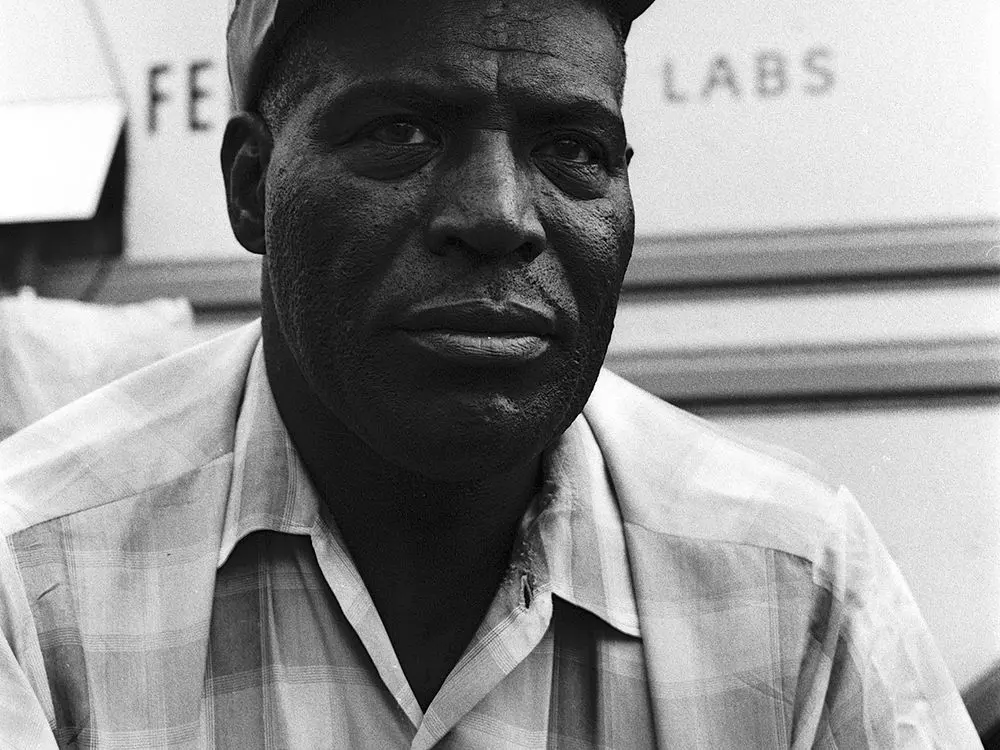
Howlin’ Wolf
Chicago Blues

Howlin’ Wolf’s immense voice, hypnotic riffs and physical stage presence made him one of Chicago blues’ most striking figures.
His recordings of Willie Dixon’s songs foregrounded the music’s dark, physical force. He directly influenced the Rolling Stones and many British blues-rock bands.
Where did the sound come from?
Chester Arthur Burnett was born in Mississippi. As a young man, he learned guitar and showmanship from Charley Patton, while Sonny Boy Williamson II guided his harmonica playing. Farm life, church, Delta blues and local dances formed his musical foundations.
After the Second World War, he formed a band around Arkansas and Mississippi and played on KWEM radio. Sam Phillips recorded “Moanin’ at Midnight” and “How Many More Years” in Memphis in 1951. The recordings became part of a rivalry between Chess and RPM. Wolf eventually settled in Chicago and worked with Chess.
The years that changed the course
Records such as “Smoke Stack Lightning”, “I Asked for Water”, “Who Will Be Next” and “Sitting on Top of the World” established his hypnotic blues language during the 1950s. His collaboration with Willie Dixon extended from the end of the decade into the 1960s, producing classics such as “Spoonful”.
Guitarist Hubert Sumlin’s agile, spacious lines gave a contrasting movement to Wolf’s weighty voice. His formidable Chicago club performances showed that he was a deliberate master of the stage as well as a fearsome singer.
What made the sound instantly recognisable?
Wolf’s deep, growling voice seemed to push against the limits of human power. Volume alone did not explain the effect, however. Intensity emerged from the repetition of a single riff, unexpected pauses and the friction between his vocal and the beat.
Harmonica, electric guitar and a minimal rhythm section created menacing spaces rather than crowded arrangements. “Smokestack Lightnin’” turned fragments of traditional blues into a modern, almost trance-like structure built around one chord.
The world behind the stage
Wolf carried the Delta tradition into an electric, theatrical modernity in the city. As the Rolling Stones, the Yardbirds, Cream and other British groups brought his repertoire to rock audiences, the force of the original recordings became still more apparent.
Turning points
In Mississippi, Chester Burnett learned guitar and stagecraft from Charley Patton and absorbed influences from Son House and gospel. After the war, he developed a radio programme and a powerful band in West Memphis. The Sam Phillips recordings “Moanin’ at Midnight” and “How Many More Years” reached Chess and brought major success in 1951. Following the move to Chicago, his own “Smokestack Lightning” and Willie Dixon compositions such as “Spoonful” and “Back Door Man” strengthened the repertoire. Although older than many rock stars, Wolf was an extraordinary physical performer, crawling on his knees, howling and using his whole body onstage.
Inside the studio
The vast presence of Wolf’s voice depended on precise control of breath and rhythm. Hubert Sumlin’s fine, broken guitar phrases left space around the singing, while Willie Johnson’s early distorted tone and Hosea Lee Kennard’s piano shaped different phases of the sound. “Smokestack Lightning” built hypnotic tension around one chord, showing how blues could develop through timbre and repetition rather than harmonic change. The dry sound of the Chess recordings brought Wolf’s physical presence directly forward.
Who carried the influence forward?
Wolf deeply influenced the Rolling Stones, the Yardbirds, Cream, Led Zeppelin and Captain Beefheart. His importance also extended beyond supplying material for later white rock groups. He was a strong employer and leader who sought regular pay, insurance and professional discipline for his musicians. Improving his literacy as an adult and learning about financial matters reveal the deliberate, responsible personality behind the blues legend.
A listening guide to the 1950s
This is a listening route, not a ranking of the best songs. These starting points trace the artist’s development across the decade, different sides of the music and its place in history.
How Many More Years
A first major hit announcing his electric blues authority.
Moanin’ at Midnight
A howling vocal and a hypnotic riff.
Smokestack Lightning
The spellbinding power of repetition around a single chord.
Sitting on Top of the World
An old standard remade as a personal, weighty urban blues.
The legacy in music history
He gave the raw power of the blues an unforgettable voice and stage personality.
Howlin’ Wolf’s musical identity took shape in the 1950s and continued to resonate in later decades through fresh interpretations of the repertoire, echoes of the stage approach and direct influence on other musicians. In this dossier, Oldies Radyo considers the artist as a creative force in the evolution of popular music, alongside the nostalgic appeal.
- Rock & Roll Hall of Fame – Howlin’ Wolf
- Chess Records – Howlin’ Wolf
- Library of Congress – Howlin’ Wolf search
These articles were originally written in Turkish for Oldies Radyo through comparisons of international institutional sources and archives. This English edition preserves their scope and editorial approach.
Related 1950s artist features