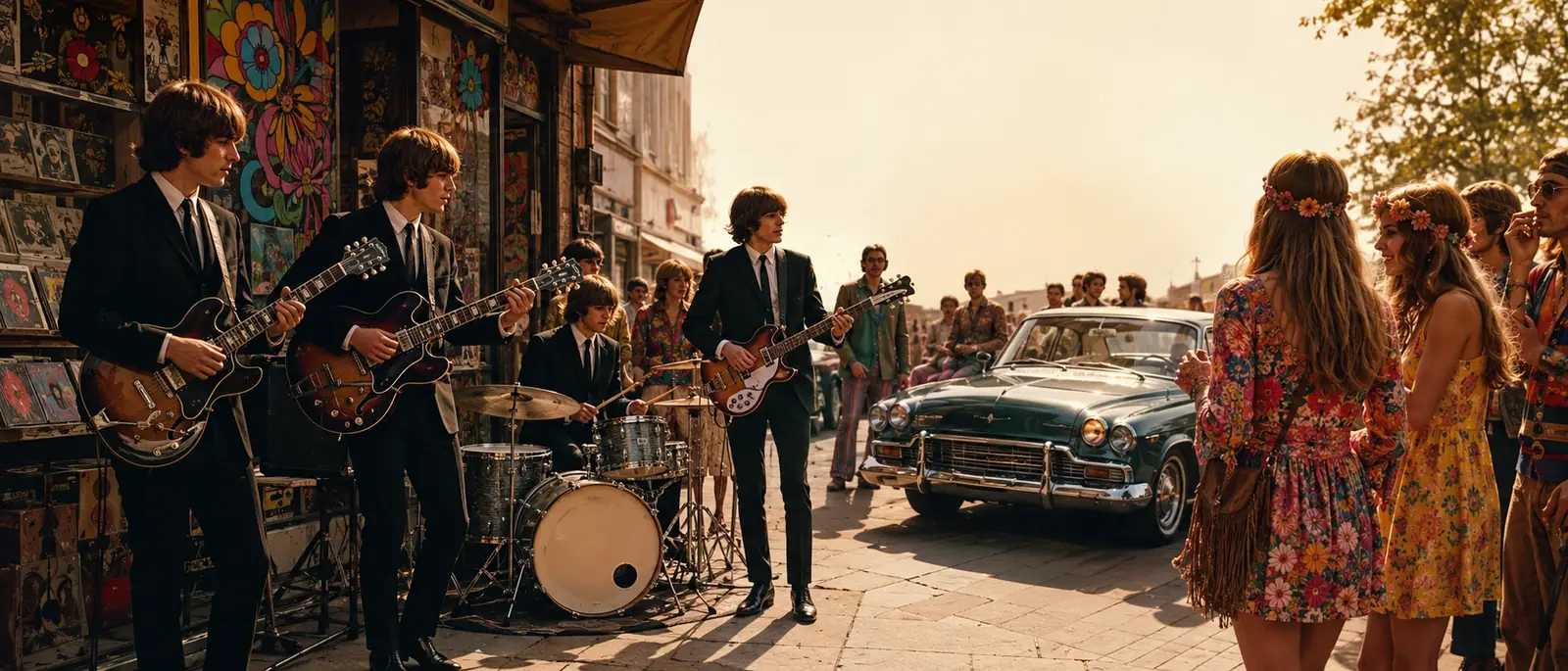
The folk revival brought traditional songs, acoustic performance and social commentary into the center of early-1960s youth culture. Coffeehouses, college campuses and the Greenwich Village scene became gathering points for listeners seeking music that felt more direct and serious than commercial pop.
Greenwich Village
New York’s folk scene connected traditional ballads, blues, labor songs and contemporary songwriting. Bob Dylan, Joan Baez, Dave Van Ronk and others moved through a culture that valued authenticity, lyrics and live performance.
Old songs, new meanings
Traditional material could be reinterpreted to speak to civil rights, war and generational change. The revival treated the past as a living resource rather than a museum.
Why it matters
The folk revival raised expectations around lyrics and helped prepare the audience for singer-songwriters, protest music and the folk-rock explosion that followed.