Gospel · 1950s Career
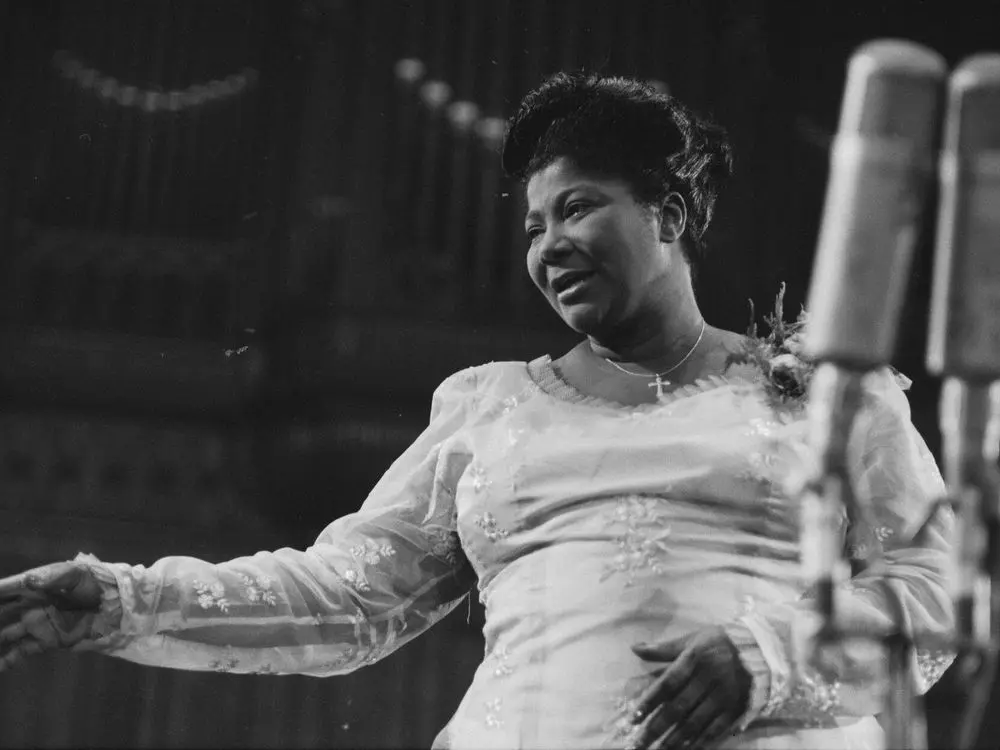
Mahalia Jackson was one of gospel music’s greatest voices and one of the artists who carried the form to a much wider public without diluting its spiritual power. Her 1950s recordings and performances made gospel visible in concert halls, on television and eventually within the civil-rights movement.
A voice shaped by church tradition
Jackson’s singing was built on deep breath, flexible timing, call-and-response instinct and emotional escalation. She could begin a phrase quietly and build it into overwhelming intensity without ever sounding theatrical for its own sake.
From gospel audience to national recognition
By the 1950s, Jackson was already a major gospel star. Recordings such as “Move On Up a Little Higher” had established her, and appearances in major venues helped bring sacred Black music into spaces that had rarely treated it as concert art.
Why gospel matters to popular music history
The techniques heard in Jackson’s singing—melisma, repetition, rising intensity and communal response—became central to soul and influenced rock and R&B singers as well. Gospel was not a side story to 1950s popular music; it was one of its deepest foundations.
Legacy
Jackson’s importance extends beyond chart success. She helped preserve gospel’s religious identity while proving it could command national attention, and her voice became closely associated with dignity, spiritual strength and the growing civil-rights struggle.
