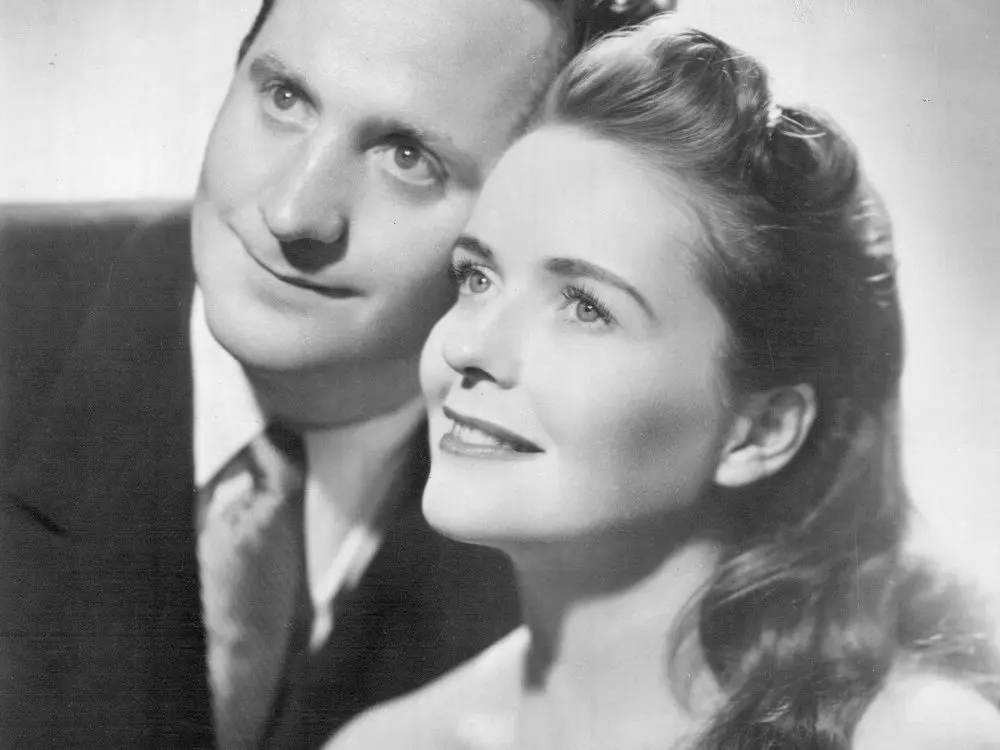
Les Paul & Mary Ford
Pop / Guitar Innovation

Les Paul and Mary Ford brought multitrack recording, overdubbing and electric-guitar effects into the centre of popular music.
Records such as “How High the Moon” showed that a studio could help create music as well as document it. Their technological innovations left a mark on the pop and rock production that followed.
Where did the sound come from?
As a young man in Wisconsin, Lester Polsfuss experimented with guitars, electronics and sound systems. He became known as a jazz and country guitarist. His Log prototype, developed through work on electric-guitar bodies and pickups, was an important step in the history of the solid-body guitar. Colleen Summers, known as Mary Ford, was the partnership’s other creative half, contributing a strong, clear voice and rhythm guitar.
They married in the late 1940s and began working in a home studio. Paul’s experiments in layering recordings from disc to disc became more flexible with magnetic tape and multiple-recording techniques. Ford’s voice was recorded repeatedly over itself, creating a small vocal choir from one singer.
The years that changed the course
“How High the Moon” was both a major hit in 1951 and a public demonstration of studio innovation. “The World Is Waiting for the Sunrise”, “Mockin’ Bird Hill”, “Vaya con Dios” and “Nola” showed how easily the duo moved between pop, country and jazz.
Radio and short television programmes gave the magical sound of the home studio a recognisable identity as a performing couple. Their chart dominance declined as tastes changed in the mid-1950s, but the recording language they developed became part of modern pop production.
What made the sound instantly recognisable?
Paul recorded guitar solos at different speeds, using tape delay and close microphones to produce a bright, almost otherworldly tone. Ford’s layered voice sounded both intimate and impossibly seamless.
These records were constructed sound designs, assembled piece by piece. For a wide pop audience, the studio was becoming unmistakably a tool for composition as well as a place to record a live performance.
The world behind the stage
Their success showed that technological experimentation could work hand in hand with musical feeling. From the Beatles to digital production, the use of multitrack recording, overdubs and effects owes a fundamental debt to their home-studio experiments.
Turning points
Paul was already a successful guitarist and an electronics enthusiast when his musical and personal partnership with Ford began changing the recording world of the 1950s. “How High the Moon”, “The World Is Waiting for the Sunrise”, “Mockin’ Bird Hill” and “Vaya con Dios” became major pop hits through layered guitar and vocal recordings. Television and radio brought domestic technology into show business. Although musical tastes changed as their marriage and professional partnership approached their later years, the early-decade successes symbolised the studio’s emergence as an instrument in its own right.
Inside the studio
Paul systematically used techniques including disc-to-disc recording, multiple tracks, close microphones, delay and changes of speed. Ford’s voice was layered repeatedly to make a vocal choir from one person; guitar lines were superimposed in different octaves and colours. The result was an artificial yet remarkably warm pop sound that could not be reproduced exactly on a live stage. Ford’s timing and control of pitch gave the experiments their musical coherence. Her contribution deserves recognition as that of a creative partner.
Who carried the influence forward?
Vocal layering, overdubbing and studio effects are now ordinary parts of pop production, and Paul and Ford’s work helped establish that language. The Beatles, the Beach Boys and generations of home-studio musicians drew on their technical legacy. Their story also demonstrates that innovation involves performers, engineers and creative partnerships working together. Making Ford’s role visible is essential to understanding it.
A listening guide to the 1950s
This is a listening route, not a ranking of the best songs. These starting points trace the artist’s development across the decade, different sides of the music and its place in history.
How High the Moon
A pop-chart breakthrough for layered guitar and vocals.
The World Is Waiting for the Sunrise
A showcase for changes of speed and overdubbing.
Mockin’ Bird Hill
A country-pop melody joined to technological invention.
Vaya con Dios
The duo’s warm, melodic international hit.
The legacy in music history
They helped establish the language of modern studio recording.
Les Paul and Mary Ford’s musical identity took shape in the 1950s and continued to resonate through new versions of their repertoire, echoes of their performance style and direct influence on other musicians. Oldies Radyo considers the duo as creative participants in popular music’s evolution, alongside their nostalgic appeal.
- Rock & Roll Hall of Fame – Les Paul
- Les Paul Foundation – Biography
- Library of Congress – Les Paul and Mary Ford search
These articles were originally written in Turkish for Oldies Radyo through comparisons of international institutional sources and archives. This English edition preserves their scope and editorial approach.
Related 1950s artist features