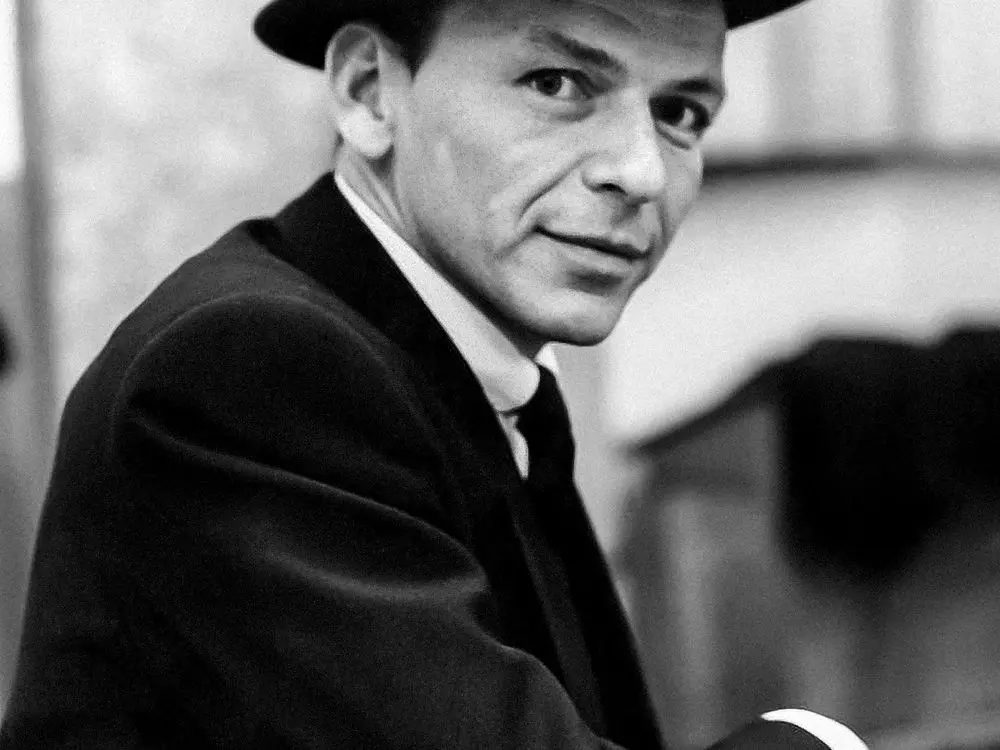
Frank Sinatra
Crooner / Pop

As rock ’n’ roll rose in the 1950s, Frank Sinatra rebuilt his career as one of mainstream pop’s most sophisticated interpreters. His phrasing, breath control and dramatic treatment of lyrics made him a great vocal artist of the album age.
His importance in this period lies in refusing to remain simply a star from the years before rock. Concept albums, powerful orchestration and repertoire exploring adult emotions represented another mature current in popular music.
Where did the sound come from?
In the 1940s, Sinatra had become a major star among young listeners with Tommy Dorsey’s orchestra and then as a solo performer. Early in the 1950s, record sales fell, his television programme ended and observers began to consider his career over.
His role in From Here to Eternity in 1953 and the Academy Award he won changed that public perception. Work beginning at Capitol Records in the same period, with arranger Nelson Riddle and later Gordon Jenkins, brought a musical rebirth.
The years that changed the course
Songs for Young Lovers, In the Wee Small Hours, Songs for Swingin’ Lovers!, Where Are You? and Come Fly with Me showed how songs could be organised around a shared feeling or narrative. Using the long-playing record, Sinatra made an album something more than a random collection of hit songs.
By the end of the decade he was back at the top in films, nightclubs and records. Although he regarded rock ’n’ roll with suspicion, he created a modern, adult and exceptionally controlled pop art in his own field.
Frank Sinatra: a changing stage personality
Every image in this gallery shows Frank Sinatra himself. Pictures from different periods are placed together to illustrate changes in his career.

What made the sound instantly recognisable?
Breath and phrasing are Sinatra’s greatest instruments. The unbroken line he said he had learned from Tommy Dorsey’s trombone helped him place words within a melody with the ease of speech. He rides the rhythm comfortably in Riddle’s bright swing arrangements; with Jenkins’s strings he adopts a darker, lonelier tone.
Treating lyrics like an actor, he turns each song into a personal monologue. During the 1950s, the youthful brightness of his voice gave way to a deeper, more vulnerable and dramatic colour.
The world behind the stage
Sinatra’s revival shows that rock ’n’ roll did not erase every older form of pop. As youth music exploded in the same decade, concept albums, hi-fi listening at home and adult nightlife were also growing.
Turning points
After declining sales and public interest late in the 1940s, Sinatra rebuilt both his recording and film careers in the early 1950s. The Oscar for From Here to Eternity changed his public image. His partnership with Capitol and Nelson Riddle ran from “I’ve Got the World on a String” through Songs for Young Lovers, In the Wee Small Hours and Songs for Swingin’ Lovers! It transformed him from a singer of individual hits into a mature interpreter directing an album’s emotional flow. By the late 1950s, he was moving towards the idea of Reprise and greater creative and commercial independence.
Inside the studio
Sinatra’s studio method depended on singing in the same room as a live orchestra and shaping the lyrics’ drama together with the arrangement. Nelson Riddle’s light but lively brass, Gordon Jenkins’s rich strings and Billy May’s forceful swing created different Sinatra characters. Microphone technique, concealed breaths and the ability to place a phrase behind the bar line made the recording an inner monologue close to speech. The LP’s greater length let him develop a single atmosphere—loneliness, night, travel or celebration—across an album.
Who carried the influence forward?
His 1950s work demonstrated that a pop album could be a coherent narrative as well as a compilation of hits. Tony Bennett, Scott Walker and later interpreters, along with creators of rock-era concept albums, benefited from the possibilities it opened. Although his personal life and tough public image sometimes overshadowed the music, the records’ subtlety continues to show that interpretation can be as creative an art as composition.
A listening guide to the 1950s
This is a listening guide rather than a greatest-hits ranking, with starting points chosen to trace the artist’s development, range and place in music history across the decade.
I’ve Got the World on a String
The beginning of the lively, confident Capitol comeback.
In the Wee Small Hours of the Morning
The central song of a concept album shaped by loneliness.
I’ve Got You Under My Skin
A peak of Nelson Riddle’s arranging and Sinatra’s phrasing.
Where Are You?
A dark ballad interpretation framed by Gordon Jenkins’s strings.
Come Fly with Me
A bright swing classic carrying the idea of travel across an album.
The legacy in music history
He raised the standard of adult pop and album-making in the rock age.
The identity Frank Sinatra established in the 1950s lived on through later reinterpretations of his repertoire, imitations of his stage approach and direct influences on musicians. Oldies Radyo approaches him here as a creative participant in the transformation of popular music, as well as a familiar figure from its past.
The original Oldies Radyo feature was researched and written by comparing international institutional sources and archives. This English translation retains its source references.