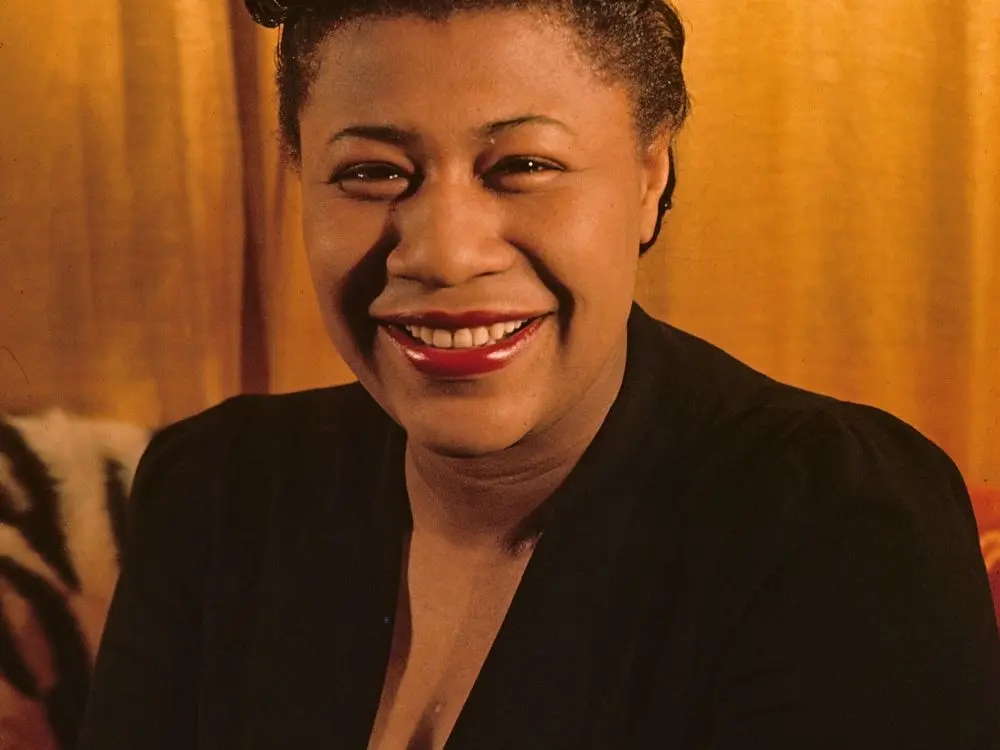
Ella Fitzgerald
Jazz / Vocal

Ella Fitzgerald set an exceptional standard for jazz singing with her range, rhythmic sense and scat technique. Her 1950s Song Book albums devoted to major composers carried the American popular-song repertoire to new generations.
Her clear diction and musical intelligence made even complex melodies feel natural. She played a major role in keeping jazz singing a living, renewing art during the rock ’n’ roll age.
Where did the sound come from?
Born in Virginia and raised around New York, Fitzgerald entered an amateur night at Harlem’s Apollo Theater in 1934 after a difficult adolescence. Her singing attracted attention. Joining Chick Webb’s orchestra established her professional identity on the great stages of the swing era.
After Webb’s death she led the orchestra, then moved into a solo career in the 1940s, developing scat improvisation alongside pop singing. By the 1950s, her technical mastery was recognised. The major transformation came in her repertoire and approach to albums.
The years that changed the course
Beginning in 1956 for Norman Granz’s Verve Records, the Song Book series turned the work of Cole Porter, Rodgers and Hart, Duke Ellington, Irving Berlin and other major composers into comprehensive album projects. These recordings matter for their reinterpretation of American popular songs as well as their preservation.
In the same period, Jazz at the Philharmonic tours made her an international concert star. Granz’s opposition to discriminatory practices in venues and hotels helped improve her touring conditions. Her cheerful stage presence should not obscure the racial and gender barriers she faced.
What made the sound instantly recognisable?
Clear diction, a wide range and precise intonation keep a song’s melody sharply defined. When she sings scat, her voice becomes an instrument for rhythmic and harmonic improvisation, like a trumpet or saxophone. Her command of time makes even the most complex transitions seem effortless.
On the Song Book recordings she serves the composition rather than displaying technique for its own sake, making the words and melodic structure clearly audible. Live recordings reveal a freer personality through humour, musical quotations and sudden improvisations.
The world behind the stage
The LP’s development in the 1950s allowed her to interpret composers’ catalogues as coherent bodies of work rather than pursue a single hit. Vocal jazz consequently reached a new level as an album art that was both archival and contemporary.
Turning points
Fitzgerald’s greatest change in the 1950s came as her manager Norman Granz founded Verve and launched the Song Book projects. The repertoires of Cole Porter, Rodgers and Hart, Duke Ellington, Irving Berlin and George Gershwin established her as a great interpreter of American popular song as well as a jazz improviser. The live-performance path from Ella at Newport towards Ella in Berlin maintained her scat ability and flexibility on stage. Granz’s opposition to segregation on tour helped build her international career on more equal terms.
Inside the studio
Her voice combines exceptional pitch accuracy, range and rhythmic lightness. Clear delivery faithful to the compositions made the Song Book performances reference interpretations; live scat allowed her to take melodies apart like an instrumental improviser. Arrangers including Buddy Bregman, Nelson Riddle and Paul Weston offered different orchestral colours. Working with Duke Ellington’s own orchestra on his project brought jazz composition and vocal interpretation together as equal creative forces.
Who carried the influence forward?
Fitzgerald played a central role in preserving standards and making them known around the world. Her technique remains a benchmark in vocal jazz, from the world of Sarah Vaughan to contemporary singers, while she showed pop audiences that complex melodies could be made accessible. Her career also tells the story of a Black woman gaining international esteem while confronting discriminatory conditions in the American entertainment industry. The rhythmic daring behind her elegant stage personality gives her music its enduring strength.
A listening guide to the 1950s
This is a listening guide rather than a greatest-hits ranking, with starting points chosen to trace the artist’s development, range and place in music history across the decade.
Anything Goes
An elegant example from the Cole Porter Song Book.
Ev’ry Time We Say Goodbye
A great ballad interpretation that shapes feeling through vocal control.
Blue Moon
Melodic clarity in the Rodgers and Hart repertoire.
Lady Be Good – live performances
A display of scat technique and rhythmic intelligence.
Irving Berlin Song Book
An album project systematically reinterpreting the American song repertoire.
The legacy in music history
She redefined the American songbook through impeccable interpretation and improvisation.
The identity Ella Fitzgerald established in the 1950s lived on through later reinterpretations of her repertoire, imitations of her stage approach and direct influences on musicians. Oldies Radyo approaches her here as a creative participant in the transformation of popular music, as well as a familiar figure from its past.
- Ella Fitzgerald official website – Biography
- National Endowment for the Arts – Ella Fitzgerald
- Library of Congress – Ella Fitzgerald search
The original Oldies Radyo feature was researched and written by comparing international institutional sources and archives. This English translation retains its source references.